
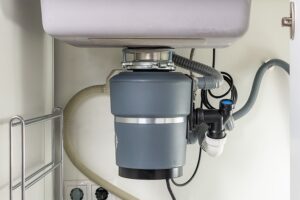
 You flip the kitchen sink switch, expecting your garbage disposal to grind food scraps. Instead, you hear a steady humming sound, but nothing seems to be moving. The disposal may have worked perfectly yesterday, making the sudden change frustrating.
A garbage disposal that hums but does not turn often has a jammed grinding mechanism. The motor is receiving electrical power, but something may be preventing the rotating plate from moving. A tripped overload protector, failing motor, or electrical problem can also be responsible.
The most important thing to do is turn the disposal off immediately. Continuing to operate a stalled motor can cause overheating and additional damage.
For Albuquerque homeowners, understanding the difference between a mechanical jam and a motor problem can help determine whether a safe, manufacturer-approved troubleshooting step is appropriate or whether professional plumbing repair is needed.
Why Does a Garbage Disposal Hum Without Spinning?
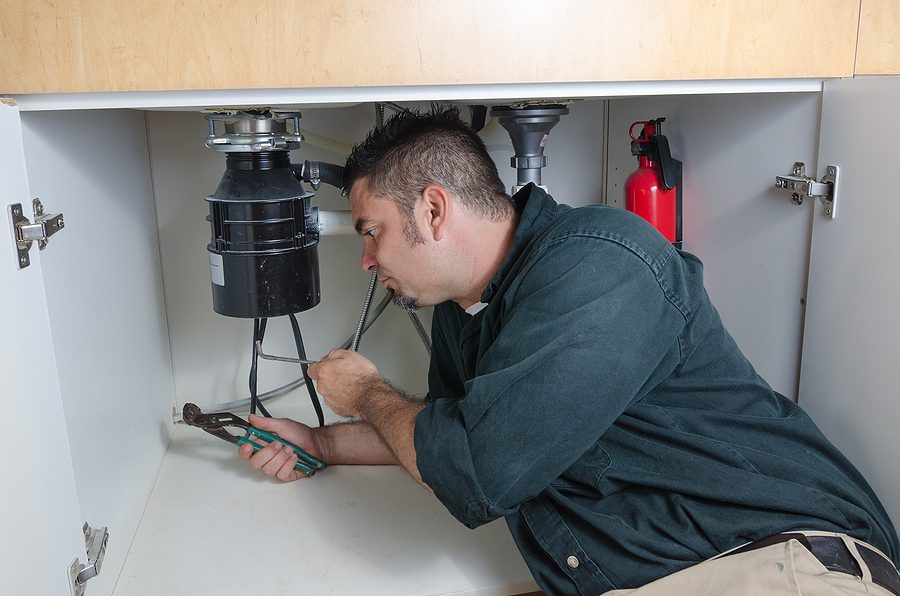
A garbage disposal uses an electric motor to rotate a grinding plate inside the disposal chamber. Small impellers attached to the plate help push food waste against a stationary grinding ring, breaking it into smaller particles that can flow through the drain.
Despite what many people call them, most household garbage disposals do not have sharp, rotating blender-style blades.
When the grinding plate cannot rotate, the motor may produce a humming sound as it attempts to start.
This can happen when a hard object becomes trapped between moving and stationary components. It can also occur when internal parts become worn, damaged, or unable to turn freely.
A humming sound is an important clue, but it does not identify the exact failure.
For a basic explanation of how the equipment works, see Garbage Disposal Operation Basics.
What Should You Do Immediately When Your Garbage Disposal Starts Humming?
If your garbage disposal hums without grinding, resist the temptation to flip the switch several times to see whether it starts working.
Repeated attempts can overheat a stalled motor.
Take these precautions before investigating:
- Turn off the disposal switch immediately. Do not allow the unit to continue humming.
- Disconnect its electrical power before any inspection. If the disposal has an accessible plug, unplug it safely. If it is hardwired, use the correct circuit breaker. A wall switch alone is not sufficient protection against unexpected operation.
- Keep your hands out of the grinding chamber. Never reach inside to retrieve food scraps or an obstruction.
- Locate the manufacturer and model number. The owner’s manual will explain whether your disposal has a reset button, a jam-release mechanism, or other approved troubleshooting features.
- Stop if you notice burning smells, smoke, damaged wiring, or water near electrical connections. Leave the equipment disconnected and arrange qualified assistance.
If you cannot safely disconnect the power or identify the correct circuit, do not attempt to work on the unit.
Is Your Garbage Disposal Jammed or Is the Motor Failing?
A disposal that hums without turning can have several different problems. The sound pattern and what happened immediately before the failure may help narrow the possibilities.
1. A Hard Object Is Blocking the Grinding Plate
One common cause is a physical obstruction inside the disposal chamber.
A small utensil, piece of broken glass, bottle cap, or other hard object can become wedged between the rotating plate and the grinding ring.
When the motor attempts to start, the plate cannot move freely. The motor may hum because it is energized but unable to rotate.
A jam is particularly plausible when the disposal suddenly stops working after a hard object falls into the sink.
However, food waste alone does not prove a jam, and a humming sound does not guarantee that an obstruction is present.
2. The Motor Has Overheated or Tripped Its Overload Protector
Many garbage disposals include an overload protector designed to interrupt power when the motor draws excessive current or becomes too hot.
A jammed disposal may hum briefly and then become completely silent after the protection device trips.
Some units have a manual reset button, often located on the bottom or side of the housing. Its location and reset procedure vary by manufacturer and model.
A reset button does not remove a mechanical obstruction.
If the grinding mechanism remains jammed, restoring power may simply cause the motor to stall again.
Allow the unit to cool and follow the specific manufacturer’s instructions before attempting any reset.
3. The Motor or Internal Components Are Failing
Sometimes the disposal hums because the motor can no longer start or operate properly.
Possible causes include internal wear, damaged bearings, or a motor-related electrical component failure.
Depending on the model, a failed starting component may prevent the motor from developing enough starting torque to rotate the grinding plate.
A motor problem becomes more likely when the unit continues humming after a jam has been properly cleared, or when the mechanism cannot be freed using the manufacturer’s approved method.
Do not disassemble the motor housing or attempt electrical testing unless you are qualified to work on the equipment.
4. An Electrical Problem Is Preventing Normal Operation
A humming disposal generally suggests that some electrical power is reaching the motor. However, it does not establish that the electrical supply or internal circuitry is functioning correctly.
Damaged connections, failing switches, and internal electrical faults can interfere with operation.
If the unit behaves inconsistently, trips a breaker repeatedly, or produces unusual electrical symptoms, professional diagnosis is appropriate.
Electrical problems should not be investigated by opening wiring compartments or testing energized components as a homeowner troubleshooting exercise.
What Does the Sound of Your Garbage Disposal Tell You?
Different symptoms can point toward different problems, although none provides a complete diagnosis.
| What you notice | Possible explanation | Appropriate next step |
| Disposal hums steadily but does not grind | Jammed grinding plate or motor problem | Switch off immediately and disconnect power |
| Disposal hums briefly, then becomes silent | Overload protection may have tripped | Allow cooling and consult the model’s manual |
| Disposal makes no sound at all | Power supply, switch, overload protector, or motor fault | Check only accessible, safe controls described in the manual |
| Disposal repeatedly trips its reset or breaker | Persistent jam, motor fault, or electrical problem | Stop troubleshooting and arrange professional service |
| Disposal hums and leaks water | Mechanical problem plus a separate seal, connection, or housing leak | Disconnect power and arrange plumbing evaluation |
A unit that becomes silent after humming may have overheated, but it is also possible for an electrical fault to produce similar behavior.
Avoid making repair decisions from the sound alone.
Can You Fix a Humming Garbage Disposal Yourself?
Some garbage disposal jams can be resolved without replacing the unit. However, the safe procedure depends on the manufacturer’s design.
A homeowner should only attempt a troubleshooting step that is specifically supported by the owner’s manual and can be completed with the power disconnected.
Check Whether Your Model Has a Jam-Release Feature
Some garbage disposals have a hexagonal opening underneath the motor housing. This allows an approved wrench or jam-release tool to rotate the mechanism manually.
Other models use a different tool or procedure. Some do not have a bottom-mounted hex opening at all.
If your manufacturer’s instructions describe a jam-release procedure, follow them carefully after disconnecting power.
Do not assume that a standard Allen wrench fits every garbage disposal, and do not force the mechanism if it resists movement.
For official product instructions, consult the InSinkErator Support Center or Waste King, as applicable to your equipment. Use the manual for your exact model rather than instructions for a similar-looking unit.
Can You Remove an Object That Is Stuck Inside?
If a foreign object is visible in the grinding chamber, do not reach in with your fingers.
With electrical power disconnected, some manufacturer instructions permit removing accessible obstructions using suitable tools, such as long-handled pliers or tongs.
Follow the specific manual. Do not place your hand inside the chamber, even when you believe the disposal is off.
If the object is difficult to reach, trapped beneath a component, or requires disassembly, leave it for a qualified professional.
Broken glass and sharp metal objects present additional injury risks.
Should You Press the Garbage Disposal Reset Button?
A reset may be appropriate if the overload protector has tripped and the manufacturer’s instructions allow it.
First, the cause of the overload needs to be addressed. A reset cannot clear a jam or repair a damaged motor.
Allow the disposal to cool as directed by the manufacturer. Some models require a waiting period before the reset will operate.
If the reset will not engage, the disposal immediately stalls again, or the overload repeatedly trips, stop troubleshooting.
Repeated resets are not a substitute for diagnosing the underlying problem.
For broader homeowner maintenance guidance, see DIY Garbage Disposal Repair Tips All Homeowners Need to Know.
What Should You Never Do to a Humming Garbage Disposal?
A humming disposal may seem like a simple kitchen inconvenience, but its combination of electricity and moving mechanical components requires care.
Avoid these common mistakes:
- Do not repeatedly flip the wall switch. A stalled motor can overheat.
- Do not put your hand into the grinding chamber. The mechanism and trapped objects can cause injury.
- Do not use a wrench or tool that the manufacturer does not approve. Improper force may damage internal components.
- Do not press the reset button repeatedly. Persistent overloads need diagnosis.
- Do not pour chemical drain cleaners into the disposal to clear a mechanical jam. They will not remove a trapped utensil or repair a motor and may introduce chemical hazards.
- Do not open electrical wiring compartments or disassemble the motor. Those repairs require appropriate training.
If you smell burning insulation, see smoke, or discover water near the electrical connections, keep the unit disconnected and arrange professional assistance.
Could a Clogged Kitchen Drain Cause the Disposal to Hum?
A clogged kitchen drain and a jammed garbage disposal are different problems, although they can happen at the same time.
A drain clog restricts wastewater from leaving the sink. Water may drain slowly or back up into the basin.
A mechanical disposal jam prevents the grinding plate from rotating.
If your disposal spins normally but water remains in the sink, the problem may involve the disposal’s discharge opening, the drain trap, or another section of the kitchen drain.
If the disposal hums without rotating, investigate the motor and grinding mechanism first.
For persistent drainage problems, What Should I Do If My Drain Keeps Clogging? explains when recurring clogs may need professional attention.
In some situations, both problems are present. Food waste may have accumulated in the drain while a separate obstruction prevents the disposal from operating.
Clearing the drain will not necessarily free a jammed grinding plate.
When Should You Repair or Replace a Humming Garbage Disposal?
Not every humming garbage disposal needs replacement.
If the problem is a removable obstruction and the motor is otherwise functioning properly, the unit may return to normal operation after the jam is safely cleared.
Replacement becomes more reasonable when internal components are damaged, the motor has failed, the housing is leaking, or repair parts are unavailable or uneconomical.
Consider the following factors.
The Condition of the Motor
A disposal that repeatedly hums, overheats, or trips its overload protector may have an internal problem that goes beyond a simple jam.
If the grinding mechanism has been properly checked and the motor still cannot start, further professional diagnosis is appropriate.
The Age and General Condition of the Unit
An older disposal with recurring problems may not be worth repairing if major components need replacement.
However, age alone does not determine whether the equipment should be replaced.
The actual condition, repair requirements, and availability of replacement parts matter more than a generic lifespan estimate.
Whether the Disposal Is Leaking
Water leaking from a removable plumbing connection may require a different repair than water escaping through a deteriorated disposal housing.
If the housing itself is damaged or corroded, replacement may be the more practical option.
Leaks near electrical components should be treated as a reason to disconnect power and stop using the unit.
The Cost and Availability of Repairs
A minor obstruction may require relatively little work, while internal motor failure can make replacement more practical.
The appropriate decision depends on the specific unit, the diagnosis, and the cost of the available options.
A plumber can evaluate the disposal and help you understand whether repair or replacement makes sense.
For related plumbing concerns, Day & Night Plumbing also provides professional plumbing services in Albuquerque.
How Can You Help Prevent Future Garbage Disposal Jams?
Proper operation and regular cleaning can reduce avoidable disposal problems.
Follow the manufacturer’s instructions for the types and amounts of food waste the unit can process.
Avoid allowing utensils, bottle caps, glass, and other nonfood objects to enter the grinding chamber.
Feed food waste gradually rather than forcing large quantities into the disposal at once.
Use the water-flow procedure recommended for your model. Many manufacturers recommend cold water during grinding, but always follow the instructions for your specific unit.
Cleaning also matters, although cleaning will not correct a damaged motor or mechanical jam.
Our article What’s the Best Way to Clean My Garbage Disposal? provides additional maintenance guidance.
In Albuquerque, hard water and mineral deposits can affect household plumbing over time. However, mineral buildup should not automatically be blamed for a disposal that hums without turning. The immediate problem still needs to be diagnosed.
Frequently Asked Questions About Humming Garbage Disposals
Can a Garbage Disposal Hum Without Being Jammed?
Yes. Although a mechanical jam is a common explanation, a failing motor, damaged internal component, or electrical fault may also prevent the disposal from rotating.
If manufacturer-approved jam-clearing steps do not resolve the problem, professional diagnosis is appropriate.
Why Does My Garbage Disposal Hum for a Few Seconds and Then Stop?
The motor may be overheating or triggering an overload protector.
A mechanical obstruction is one possible cause, but internal motor or electrical problems can produce similar symptoms.
Do not keep switching the disposal on to test it.
Why Is My Garbage Disposal Leaking and Humming?
The disposal may have two separate problems: a mechanical or motor failure and a leak involving a plumbing connection, seal, or housing.
Disconnect electrical power and avoid operating the unit until the source of the leak has been identified.
Can a Dishwasher Connection Cause My Garbage Disposal to Hum?
A dishwasher drain hose may connect to the disposal, but that connection does not normally cause the grinding plate to stop rotating.
A dishwasher drainage problem and a humming disposal may be separate issues.
If wastewater is backing up into the dishwasher or sink, the drain connections and discharge pathway may also need inspection.
Is It Safe to Keep Using a Garbage Disposal That Hums?
No. If the disposal hums without rotating, switch it off promptly.
Continuing to energize a stalled motor may cause overheating or further damage. Do not use the disposal again until the cause has been addressed.
Get Professional Garbage Disposal Help in Albuquerque
A garbage disposal that hums without turning may have a simple obstruction, but it can also indicate a damaged motor or another problem that requires repair.
The safest approach is to stop operating the unit, disconnect power before any permitted inspection, and follow the manufacturer’s instructions for your particular model.
If the disposal continues humming after approved troubleshooting, repeatedly trips its overload protector, leaks, or shows signs of electrical damage, professional evaluation is the next step.
Day & Night Plumbing, Heating & Cooling provides plumbing repair and fixture-related services for homeowners and businesses in Albuquerque and surrounding Central New Mexico communities.
For help diagnosing a malfunctioning garbage disposal or another kitchen plumbing problem, call (505) 974-5797 or contact Day & Night Plumbing, Heating & Cooling to discuss service options.