Discovering a puddle of water around your indoor air conditioner can be alarming. Your first thought might be that something has broken or that you’re facing an expensive repair. Fortunately,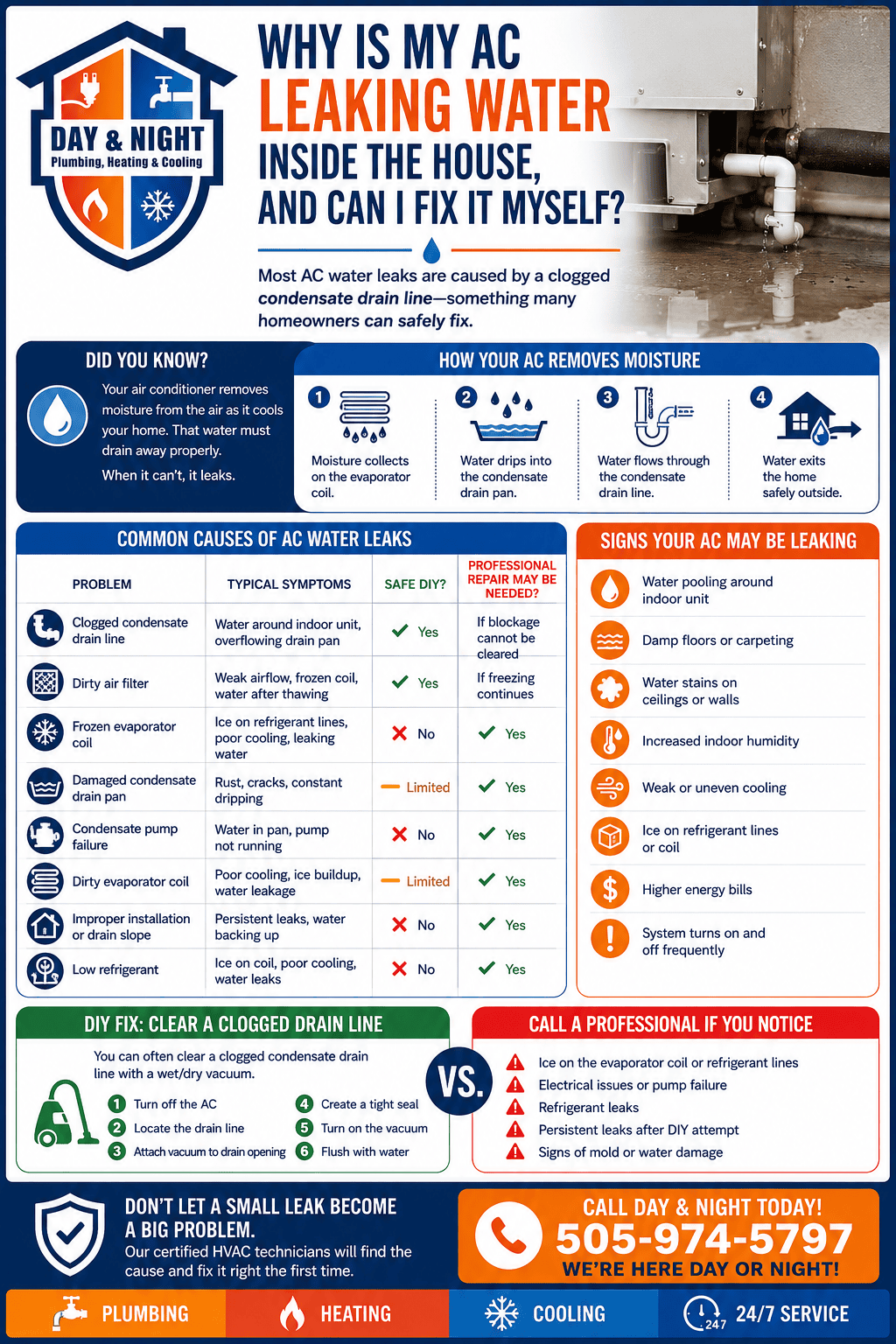 that’s not always the case.
One of the most common reasons an AC leaking water inside the house occurs is a clogged condensate drain line—a problem that many homeowners can safely address themselves with a wet/dry vacuum or a simple drain line flush. However, water leaking from your indoor unit can also signal more serious issues, such as a frozen evaporator coil, damaged drain pan, dirty air filter, condensate pump failure, or another mechanical problem that requires professional diagnosis.
Understanding why your air conditioner is leaking is the first step toward preventing water damage to your home. Left untreated, even a small leak can soak drywall, damage flooring, encourage mold growth, and shorten the lifespan of your HVAC equipment.
For homeowners throughout Albuquerque and Central New Mexico, air conditioning systems work hard during the long, hot summer months. Even though New Mexico has a dry climate, your AC still removes moisture from the indoor air every time it cools your home. If that moisture cannot drain away properly, it eventually backs up and leaks into your house.
In this guide, we’ll explain how your air conditioner removes humidity, the most common reasons water leaks develop, which repairs are safe to perform yourself, and when it’s time to call the experienced technicians at Day & Night Plumbing, Heating & Cooling. Throughout the article, we’ll focus on practical homeowner education, safe troubleshooting, and knowing the difference between a simple maintenance issue and a repair that requires professional service. This educational, diagnosis-first approach reflects the company’s emphasis on helping customers understand problems before recommending repairs.
How Does an Air Conditioner Remove Moisture?
Many homeowners don’t realize that cooling your home is only one job your air conditioner performs.
Your air conditioner also acts as a dehumidifier.
As warm indoor air passes over the evaporator coil, the coil’s cold surface causes moisture in the air to condense into water droplets—much like condensation forming on the outside of a cold glass on a hot day.
That water then follows a carefully designed drainage path:
- Moisture collects on the evaporator coil.
- Water drips into the condensate drain pan.
- The water flows through the condensate drain line.
- The condensate safely exits the home outside or into an approved drain.
This process repeats continuously while your air conditioner is running.
During Albuquerque’s hottest summer days, your air conditioner can remove several gallons of moisture from your indoor air every day, depending on your home’s size, occupancy, and indoor humidity levels. Although New Mexico’s high-desert climate is relatively dry, cooking, showers, laundry, houseplants, and everyday living still introduce moisture into the home. Your AC quietly removes that moisture to help maintain indoor comfort.
When every component of the drainage system functions properly, you’ll never notice this process.
When something blocks or interrupts that drainage, however, water begins collecting where it shouldn’t—and eventually leaks into your home.
Why Does an Air Conditioner Leak Water?
An air conditioner is designed to manage condensation safely. Water appearing around the indoor unit means that something has interrupted the normal drainage process.
Some causes are relatively minor and can often be corrected with routine maintenance, while others indicate larger mechanical or refrigeration problems that require professional repair.
The good news is that many water leaks provide warning signs before they become major problems.
Common symptoms include:
- Water pooling beneath the indoor unit
- Damp carpeting or flooring near the air handler
- Water stains on ceilings below attic installations
- Increased indoor humidity
- Musty odors
- Reduced cooling performance
- Ice forming on refrigerant lines
- Frequent system shutdowns
Recognizing these warning signs early can help prevent expensive water damage and reduce the likelihood of larger HVAC repairs.
Common Causes of AC Water Leaks
| Problem | Typical Symptoms | Safe DIY? | Professional Repair May Be Needed? |
| Clogged condensate drain line | Water around indoor unit, overflowing drain pan | ✔ Yes | If blockage cannot be cleared |
| Dirty air filter | Weak airflow, frozen coil, water after thawing | ✔ Yes | If freezing continues |
| Frozen evaporator coil | Ice on refrigerant lines, poor cooling, leaking water | ✖ No | ✔ Yes |
| Damaged condensate drain pan | Rust, cracks, constant dripping | Limited | ✔ Yes |
| Condensate pump failure | Water near basement or utility-room air handler | ✖ No | ✔ Yes |
| Low refrigerant | Frozen coil, poor cooling, higher utility bills | ✖ No | ✔ Yes |
| Improper installation or drainage slope | Recurring leaks despite cleaning | ✖ No | ✔ Yes |
As you can see, not every indoor water leak means you’ll need a major repair. In many cases, regular maintenance or a simple drain cleaning restores normal operation. The key is identifying the true cause before assuming the worst.
Clogged Condensate Drain Line: The Most Common Cause of Indoor AC Water Leaks
If HVAC technicians had to identify one issue responsible for more indoor water leaks than any other, it would almost certainly be a clogged condensate drain line.
As your air conditioner removes moisture from your home’s air, that water carries tiny amounts of dust, dirt, pollen, pet dander, and organic material into the drain system. Over months and years, this debris can accumulate inside the condensate drain line.
Eventually, the drain becomes partially—or completely—blocked.
Once that happens, water can no longer flow outside as designed. Instead, it backs up into the condensate drain pan until it eventually overflows, sending water onto the floor around your indoor air handler or furnace.
Fortunately, this is also one of the few AC water leak problems that many homeowners can often resolve themselves using a wet/dry vacuum or by carefully flushing the condensate drain line. In the next section, we’ll explain how to identify a clogged drain line, walk through safe DIY cleaning methods, and discuss when it’s time to stop troubleshooting and call Day & Night Plumbing, Heating & Cooling for professional assistance.
Clogged Condensate Drain Line: The Most Common Cause of Indoor AC Water Leaks
For most homeowners, a clogged condensate drain line is the best-case scenario because it is often the easiest and least expensive AC water leak to correct.
Every time your air conditioner cools your home, condensation drains through a PVC pipe that carries water safely outdoors or into a designated household drain. Over time, that pipe can become restricted by:
- Dust
- Dirt
- Mold or algae growth
- Pet hair
- Pollen
- Slime buildup
- Small debris
As the blockage grows, water slows down until it eventually backs up into the condensate drain pan. Once the pan fills, water begins overflowing into your home.
Signs Your Drain Line Is Clogged
You may notice:
- Water pooling around the indoor air handler
- A full or overflowing drain pan
- A musty smell near the unit
- Water dripping from unexpected locations
- Your AC shutting itself off if a float safety switch is installed
- Reduced indoor comfort caused by excess humidity
Many newer HVAC systems include a condensate overflow safety switch that automatically shuts the system down before water damage becomes severe. While this safety feature helps protect your home, it should never be bypassed. It indicates that the drainage problem needs to be corrected before the air conditioner is restarted.
How to Clear a Clogged AC Drain Line Using a Wet/Dry Vacuum
One of the safest DIY methods for clearing a clogged condensate drain is using a wet/dry shop vacuum.
This approach removes many common blockages without disassembling the HVAC system.
Step 1: Turn the System Off
Before performing any maintenance, switch the thermostat to Off and shut off power to the indoor air handler if possible.
Working around electrical components while water is present is never recommended.
Step 2: Locate the Drain Line Exit
Most condensate drain lines terminate outside the home near the foundation or next to the outdoor condenser.
Look for a small PVC pipe extending from the house.
Step 3: Attach the Wet/Dry Vacuum
Place the vacuum hose firmly over the drain pipe opening.
Many homeowners use a towel or duct tape to create a tighter seal and improve suction.
Step 4: Vacuum for Several Minutes
Run the vacuum for approximately one to three minutes.
If the clog consists of algae, slime, or debris, you’ll often hear material being pulled into the vacuum canister.
Step 5: Check for Proper Drainage
Return indoors and inspect the drain pan.
If water begins draining normally again, the blockage has likely been removed.
Continue monitoring the system over the next several cooling cycles to ensure the leak has stopped.
How to Flush an AC Condensate Drain Line
If vacuuming improves drainage but doesn’t completely solve the problem, flushing the drain line may remove remaining buildup.
Many HVAC professionals use specialized drain-line cleaning equipment, but homeowners can safely perform a basic flush if they’re comfortable doing so.
General Steps
- Turn the HVAC system off.
- Locate the condensate drain cleanout (usually a capped vertical PVC pipe near the indoor unit).
- Remove the cap carefully.
- Slowly pour warm water through the pipe to check for proper flow.
- If desired, use a manufacturer-approved condensate drain cleaning solution designed for HVAC systems.
- Replace the cap.
- Restore power and monitor the system.
Avoid forcing objects, wires, coat hangers, or drain snakes into the condensate line. These can puncture fittings, create leaks, or push the blockage farther into the drain system.
Similarly, avoid using harsh chemical drain cleaners intended for household plumbing. These products can damage PVC components and may create additional repair issues.
If the drain continues overflowing after vacuuming and flushing, it’s time to schedule professional service.
Can a Dirty Air Filter Cause Water Leaks?
Absolutely.
Many homeowners are surprised to learn that one of the simplest maintenance items can eventually create an indoor water leak.
When an air filter becomes heavily clogged, airflow across the evaporator coil decreases significantly.
Without adequate warm air moving across the coil, its temperature can fall below freezing.
Ice gradually forms across the evaporator.
Eventually:
- The cooling cycle stops.
- The ice begins melting.
- Large amounts of water overwhelm the drain system.
- Water leaks around the indoor unit.
Fortunately, replacing a dirty air filter is one of the easiest forms of preventative maintenance.
Depending on your system, household occupancy, pets, and indoor air quality, filters should generally be inspected every month and replaced as needed. Clean filters not only reduce the risk of frozen coils but also improve airflow, system efficiency, and indoor comfort.
Frozen Evaporator Coils
A frozen evaporator coil is one of the more serious causes of indoor water leaks.
Unlike a simple drain blockage, frozen coils usually indicate another underlying HVAC problem.
Common causes include:
- Dirty air filters
- Blocked supply or return vents
- Failing blower motors
- Dirty evaporator coils
- Low refrigerant levels
- Airflow restrictions
- Mechanical failures
As the ice eventually melts, large amounts of water can exceed the drain pan’s capacity and overflow onto the floor.
Warning Signs
- Ice on refrigerant lines
- Ice visible inside the air handler
- Weak airflow
- Warm air from supply vents
- Long cooling cycles
- Higher utility bills
- Water appearing after the system has been off
If you suspect a frozen evaporator coil, turn the system off and allow it to thaw naturally. Continuing to operate the air conditioner can increase damage to the compressor and other components.
Although replacing a dirty filter may solve the issue in some cases, persistent freezing almost always requires professional diagnosis. Day & Night Plumbing, Heating & Cooling emphasizes identifying the underlying cause before recommending repairs, helping homeowners avoid recurring problems and unnecessary replacement costs.
Damaged Condensate Drain Pan
Your evaporator coil sits above a drain pan that collects condensation before it enters the drain line.
Over years of operation, especially in older systems, this pan can develop:
- Rust
- Corrosion
- Cracks
- Holes
- Separated seams
Even when the drain line remains completely clear, a damaged pan allows water to escape before it reaches the drain.
Signs of a failing drain pan include:
- Continuous dripping
- Rust stains
- Water appearing in the same location repeatedly
- Visible cracks during inspection
Because replacing a drain pan often requires partial disassembly of the indoor unit, this repair is generally best handled by a qualified HVAC technician.
Condensate Pump Failure
Not every air conditioning system relies solely on gravity to remove condensation.
If your indoor air handler is located in a basement, utility room, or another area where water must be pumped upward, your HVAC system may include a condensate pump.
When the pump fails:
- Water collects inside the pump reservoir.
- The reservoir overflows.
- Water leaks around the air handler.
- Some systems automatically shut down to prevent flooding.
A failed condensate pump may produce unusual humming noises, run continuously, or stop operating altogether.
Because condensate pumps involve electrical components, homeowners should avoid attempting electrical repairs. Professional diagnosis ensures the pump, float switch, discharge tubing, and electrical controls are all functioning safely.
Albuquerque’s High-Desert Climate and AC Water Leaks
Many homeowners assume that because Albuquerque has relatively low outdoor humidity, indoor AC water leaks should be rare.
In reality, every refrigerated air conditioner removes moisture from indoor air regardless of the outdoor climate.
Daily activities—including cooking, showering, washing dishes, doing laundry, and simply breathing—introduce moisture into your home. During the cooling season, your air conditioner continuously condenses and removes that moisture.
The region’s long periods of summer operation can also allow dust, pollen, and fine desert particles to accumulate more quickly within HVAC systems. Combined with months of nearly continuous cooling, this makes routine filter changes, condensate drain inspections, and annual maintenance especially important for homeowners throughout Albuquerque, Rio Rancho, Corrales, Bernalillo, Los Lunas, Edgewood, and surrounding Central New Mexico communities.
Regular preventative maintenance helps identify partially clogged drain lines, worn condensate pumps, dirty evaporator coils, and other developing issues before they result in water damage inside your home.
DIY vs. Professional AC Water Leak Repairs
One of the first questions homeowners ask after discovering water around their indoor air conditioner is, “Can I fix this myself?”
The answer depends entirely on what’s causing the leak.
Some maintenance tasks are well within the abilities of many homeowners, while others involve electrical systems, refrigerant, or specialized HVAC equipment that should only be serviced by trained professionals.
The most important rule is simple:
Never continue troubleshooting if you suspect electrical damage, frozen components, refrigerant problems, or repeated water leaks.
DIY Repairs That Are Generally Safe
Homeowners can often safely perform these maintenance tasks:
- Replace a dirty air filter
- Inspect the condensate drain pan for standing water
- Vacuum a clogged condensate drain line using a wet/dry vacuum
- Flush a condensate drain line according to manufacturer recommendations
- Clear leaves or debris from around the outdoor condenser
- Check that supply and return vents are open and unobstructed
- Monitor the system after performing basic maintenance
These simple steps often solve minor drainage issues before they become expensive repairs.
Repairs Best Left for HVAC Professionals
Professional diagnosis is recommended for:
- Frozen evaporator coils
- Refrigerant leaks
- Condensate pump replacement
- Electrical failures
- Damaged blower motors
- Cracked evaporator coils
- Compressor problems
- Damaged drain pans requiring disassembly
- Persistent water leaks after drain cleaning
- Repeated system shutdowns
Modern air conditioning systems are complex pieces of equipment. Attempting repairs beyond routine maintenance can create additional damage, void equipment warranties, or present safety hazards.
Day & Night Plumbing, Heating & Cooling follows a diagnosis-first approach, carefully identifying the root cause of a problem before recommending repair or replacement. This helps homeowners avoid unnecessary work while ensuring the real issue is addressed.
DIY vs. Professional Repair Comparison
| Issue | Safe DIY? | Difficulty | Recommended Action |
| Replace air filter | ✔ Yes | Easy | Replace with correct filter size |
| Vacuum condensate drain | ✔ Yes | Easy | Use wet/dry vacuum |
| Flush drain line | ✔ Yes | Moderate | Follow manufacturer recommendations |
| Frozen evaporator coil | ✖ No | High | Turn system off and schedule service |
| Refrigerant leak | ✖ No | High | Professional repair required |
| Condensate pump failure | ✖ No | Moderate | Professional diagnosis |
| Drain pan replacement | Limited | Moderate–High | Usually professional repair |
| Electrical issues | ✖ No | High | Shut system off immediately |
When Should You Turn Your Air Conditioner Off?
Although some minor leaks can be monitored briefly, certain situations require shutting the system down immediately.
Continuing to operate the air conditioner while serious problems exist can increase repair costs and allow water damage to spread throughout your home.
Turn your AC off immediately if you notice:
- Ice covering the evaporator coil
- Ice on refrigerant lines
- Water pouring from the indoor unit
- Water approaching electrical components
- Burning odors
- Electrical buzzing or sparking
- Overflowing drain pan
- Repeated float switch shutdowns
- Ceiling stains from attic installations
- Significant water around the furnace or air handler
After turning the system off, contact a qualified HVAC technician for diagnosis.
Why Water Leaks Should Never Be Ignored
Many homeowners assume that a small puddle isn’t urgent.
Unfortunately, water damage often develops gradually before becoming obvious.
A slow leak can damage:
- Drywall
- Hardwood flooring
- Carpet
- Laminate flooring
- Ceiling materials
- Wood framing
- Insulation
- Baseboards
- Paint
- Nearby electrical components
Moisture also creates ideal conditions for mold and mildew growth, particularly in enclosed utility closets, attics, crawl spaces, and mechanical rooms where leaks may go unnoticed for days or weeks.
Addressing a leak early is usually far less expensive than repairing water damage later.
Water Damage Warning Signs
Watch for:
- Soft drywall
- Peeling paint
- Musty odors
- Warped flooring
- Ceiling discoloration
- Mold around the air handler
- Persistent dampness
- Rust around HVAC equipment
- Increased indoor humidity
If any of these symptoms accompany an AC leak, schedule professional service promptly.
Preventative Maintenance Helps Prevent Water Leaks
The easiest way to avoid unexpected indoor AC leaks is through routine preventative maintenance.
Many water leak problems begin as small maintenance issues months before homeowners notice water on the floor.
Annual HVAC maintenance allows technicians to identify:
- Partially clogged condensate drains
- Dirty evaporator coils
- Worn condensate pumps
- Developing drain pan corrosion
- Airflow restrictions
- Dirty filters
- Loose drain fittings
- Minor electrical concerns
Correcting these issues early often prevents emergency service during Albuquerque’s hottest weather.
Homeowner Maintenance Tips
To reduce the chances of future AC leaks:
- Replace air filters regularly.
- Keep supply and return vents unobstructed.
- Schedule annual professional AC maintenance.
- Inspect around the indoor air handler periodically.
- Watch for slow drainage outside your home.
- Listen for unusual HVAC noises.
- Address reduced cooling performance promptly.
- Never ignore small water leaks.
Preventative maintenance also helps improve energy efficiency, extend equipment life, and reduce the likelihood of costly emergency repairs.
Warning Signs That Require Immediate Action
| Symptom | Possible Cause | Recommended Action |
| Water pooling beneath unit | Drain blockage | Inspect drain or schedule service |
| Ice on refrigerant lines | Frozen evaporator coil | Turn system off immediately |
| Water near electrical components | Overflow or major leak | Shut off power and call HVAC professional |
| Repeated float switch shutdown | Drain blockage | Professional inspection recommended |
| Ceiling water stains | Attic air handler leak | Turn system off and inspect immediately |
| Warm air and water leak | Frozen coil or airflow issue | Professional diagnosis |
Homeowner AC Water Leak Troubleshooting Checklist
If your air conditioner begins leaking water indoors, work through this checklist before assuming the worst:
✔ Is the thermostat set correctly?
✔ Has the air filter been inspected recently?
✔ Are all supply and return vents open?
✔ Is the condensate drain line visibly clogged?
✔ Is water draining outside the home?
✔ Is the drain pan overflowing?
✔ Do you see ice on refrigerant lines or the evaporator coil?
✔ Has the system been cooling normally?
✔ Is the leak getting worse each day?
✔ Has the unit shut itself off using a float safety switch?
If the problem isn’t resolved after replacing the filter or clearing a clogged drain line—or if you observe ice, electrical concerns, or recurring leaks—it’s time to contact an experienced HVAC professional.
For homeowners throughout Albuquerque and Central New Mexico, prompt diagnosis can prevent a minor maintenance issue from becoming significant water damage or a costly HVAC repair. Day & Night Plumbing, Heating & Cooling provides comprehensive air conditioning diagnostics, repairs, maintenance, and emergency service, with an emphasis on long-term solutions, honest recommendations, and dependable workmanship.
Frequently Asked Questions
Why is my AC leaking water inside the house?
The most common cause is a clogged condensate drain line that prevents condensation from draining properly. Other possible causes include a dirty air filter, frozen evaporator coil, cracked drain pan, condensate pump failure, or low refrigerant. Identifying the underlying cause is important because while some issues are simple maintenance tasks, others require professional HVAC repair.
Can I unclog my AC drain line myself?
In many cases, yes. Homeowners can often clear a clogged condensate drain line using a wet/dry vacuum connected to the outside drain pipe or by flushing the drain line through the cleanout opening according to manufacturer recommendations. If the clog returns or water continues leaking afterward, professional service is recommended.
Is it dangerous if my air conditioner is leaking water?
The water itself usually isn’t dangerous, but it can become a serious problem if ignored. Leaks can damage drywall, flooring, insulation, ceilings, and electrical components while creating conditions that encourage mold and mildew growth. If water is near electrical equipment, turn the system off and contact an HVAC professional immediately.
Can a dirty air filter really cause my AC to leak?
Yes. A severely clogged air filter restricts airflow across the evaporator coil, allowing it to freeze. When the ice melts, the resulting water may overwhelm the condensate drain system and overflow into your home. Replacing your air filter regularly is one of the easiest ways to help prevent this issue.
Why does a frozen evaporator coil cause water leaks?
When the evaporator coil freezes, layers of ice build up while the system is running. Once the system cycles off or you turn it off, the ice melts rapidly. The sudden volume of water can exceed what the condensate drain pan and drain line are designed to handle, causing water to overflow around the indoor unit.
How often should my AC condensate drain be cleaned?
Most HVAC professionals recommend inspecting the condensate drain during annual air conditioning maintenance. Homes with heavy AC use, pets, or higher indoor dust levels may benefit from more frequent inspections. Routine maintenance helps identify partial clogs before they lead to water damage.
Should I turn my AC off if it’s leaking water?
If you notice a small amount of water and suspect a clogged drain line, you may be able to inspect the issue safely. However, if you see ice on the refrigerant lines, significant water accumulation, electrical hazards, or repeated system shutdowns, turn the air conditioner off immediately and schedule professional service.
Will my homeowner’s insurance cover AC water damage?
Insurance coverage varies depending on your policy and the cause of the leak. Sudden and accidental water damage may be covered in some situations, while damage resulting from neglected maintenance often is not. Contact your insurance provider for details about your specific policy.
Conclusion
An air conditioner leaking water inside your home doesn’t automatically mean you need a major repair, but it should never be ignored. In many cases, the problem is as simple as a clogged condensate drain line or a dirty air filter. These routine maintenance issues can often be corrected before they cause significant water damage.
At the same time, persistent leaks, frozen evaporator coils, damaged drain pans, condensate pump failures, and refrigerant issues require professional diagnosis. Attempting complex HVAC repairs without the proper training can lead to additional equipment damage, higher repair costs, and potential safety risks.
The best way to avoid unexpected leaks is through regular preventative maintenance. Annual inspections help keep condensate drains clear, airflow unrestricted, and your cooling system operating efficiently throughout Albuquerque’s long summer season.
If your air conditioner is leaking water, don’t simply wipe up the puddle and hope the problem goes away. Finding and correcting the underlying cause early can protect your home, improve your system’s performance, and extend the life of your HVAC equipment.
Contact Day & Night Plumbing, Heating & Cooling Today
If your air conditioner is leaking water inside your home, don’t wait until a small problem turns into expensive water damage or a major HVAC repair. The experienced technicians at Day & Night Plumbing, Heating & Cooling provide professional air conditioning diagnostics, repairs, maintenance, and emergency HVAC service throughout Albuquerque and Central New Mexico.
Whether you’re dealing with a clogged condensate drain line, frozen evaporator coil, condensate pump failure, damaged drain pan, or another cooling system issue, our team will identify the root cause and recommend the most effective long-term solution—not just a temporary fix.
Our commitment to honest recommendations, dependable workmanship, and customer-focused service means you can feel confident that your cooling system is in experienced hands. If you’re noticing water around your indoor air handler or your air conditioner isn’t performing as it should, contact Day & Night Plumbing, Heating & Cooling today to schedule fast, reliable air conditioning service and restore comfort to your home. This outright call to action aligns with the company’s guidance to educate first, avoid pressure-based sales tactics, and emphasize reliable, customer-focused service.