 Summer temperatures in Albuquerque regularly climb into the 90s, making a dependable air conditioning system more than just a luxury—it’s essential for keeping your home comfortable and safe. If your air conditioner suddenly starts making loud buzzing, squealing, or clicking noises, it’s natural to wonder whether you’re dealing with a minor issue or the beginning of a major breakdown.
One of the most common questions our technicians hear at Day & Night Plumbing, Heating & Cooling is:
“My AC has started making a strange noise. Is it safe to keep running it?”
The answer depends on the type of noise you’re hearing. Some sounds point to relatively minor issues that should still be addressed promptly, while others may indicate electrical problems or failing mechanical components that could cause significant damage if ignored.
Modern air conditioning systems are designed to operate quietly. Aside from the normal sound of air moving through your vents and the outdoor condenser cycling on and off, unusual noises almost always indicate that something inside the system isn’t operating correctly. Continuing to run the equipment without diagnosing the source of the noise can increase repair costs and, in some cases, create safety concerns.
In this guide, we’ll explain what different AC noises typically mean, why they happen, which ones require immediate attention, and when it’s time to schedule professional air conditioning repair. You’ll also learn how Albuquerque’s hot, dry climate can place additional stress on cooling equipment, making routine maintenance even more important for preventing unexpected failures.
What Does It Mean When Your AC Makes Buzzing, Squealing, or Clicking Noises?
If your air conditioner is making buzzing, squealing, or repeated clicking noises, it usually indicates that a mechanical or electrical component is beginning to fail. Buzzing commonly points to electrical issues such as a failing capacitor, contactor, loose wiring, or compressor problem. Squealing often indicates worn blower motor bearings or other moving components experiencing excessive friction. Continuous clicking typically suggests that the system is struggling to start because of a thermostat, relay, capacitor, or control board issue.
Although some problems may seem minor initially, unusual sounds rarely disappear on their own. Having the system professionally inspected early can often prevent more extensive—and more expensive—repairs.
Why Air Conditioners Normally Operate Quietly
A properly functioning central air conditioning system contains numerous moving parts working together in precise coordination. The indoor blower motor circulates conditioned air through your home’s ductwork, while the outdoor condenser fan and compressor release heat outside.
These components naturally produce a gentle hum during operation. However, manufacturers engineer today’s HVAC systems to minimize vibration and noise through insulated cabinets, balanced fan blades, vibration-dampening mounts, and precision bearings.
When one of these components begins wearing out, becomes loose, or develops an electrical fault, those smooth operating sounds often change into noticeable buzzing, squealing, clicking, rattling, grinding, or humming.
Think of unusual AC noises as your system’s early warning signs. They often provide valuable clues about which component needs attention before a complete system failure occurs.
Common Air Conditioner Noises and What They Usually Mean
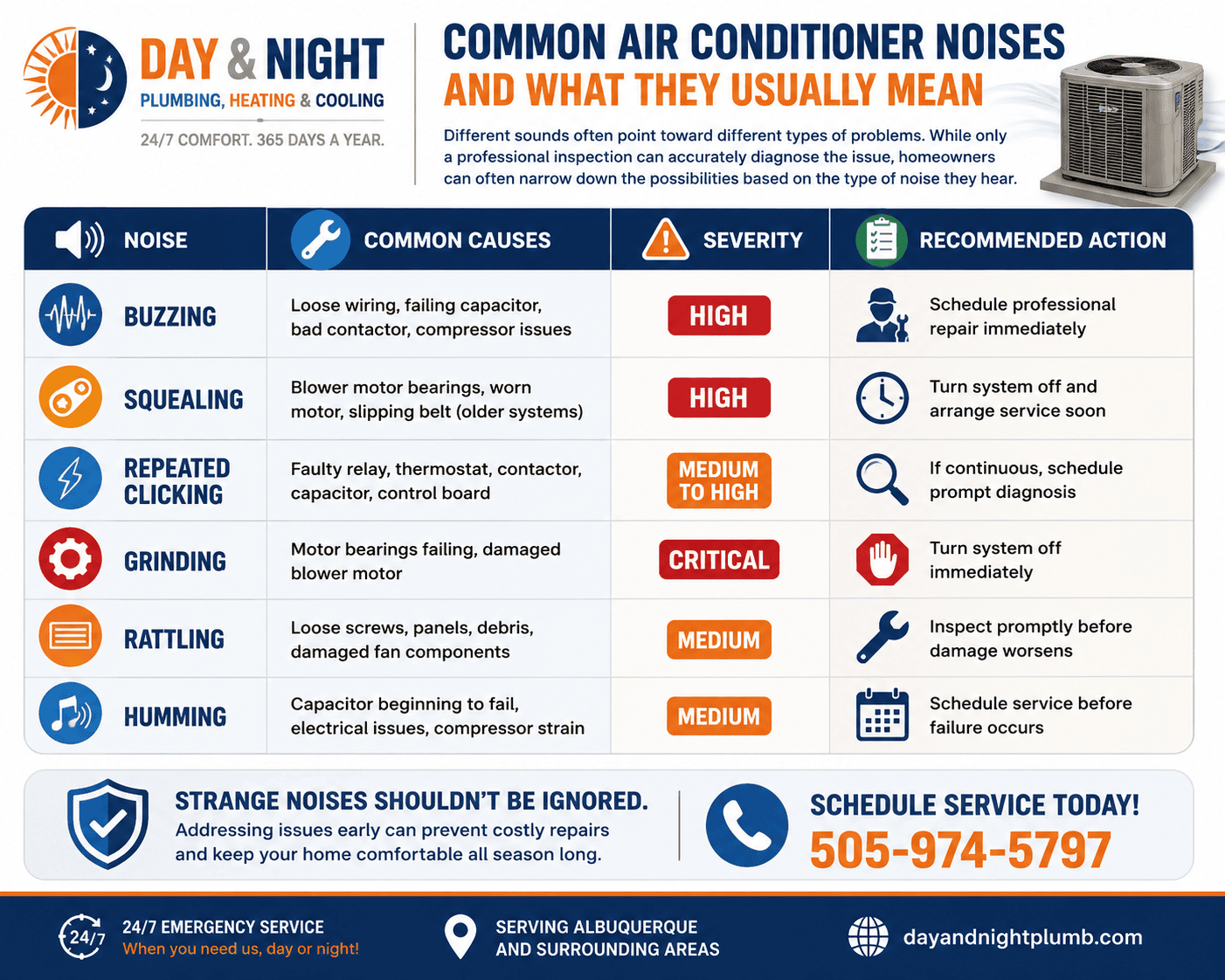
Different sounds often point toward different types of problems. While only a professional inspection can accurately diagnose the issue, homeowners can often narrow down the possibilities based on the type of noise they hear.
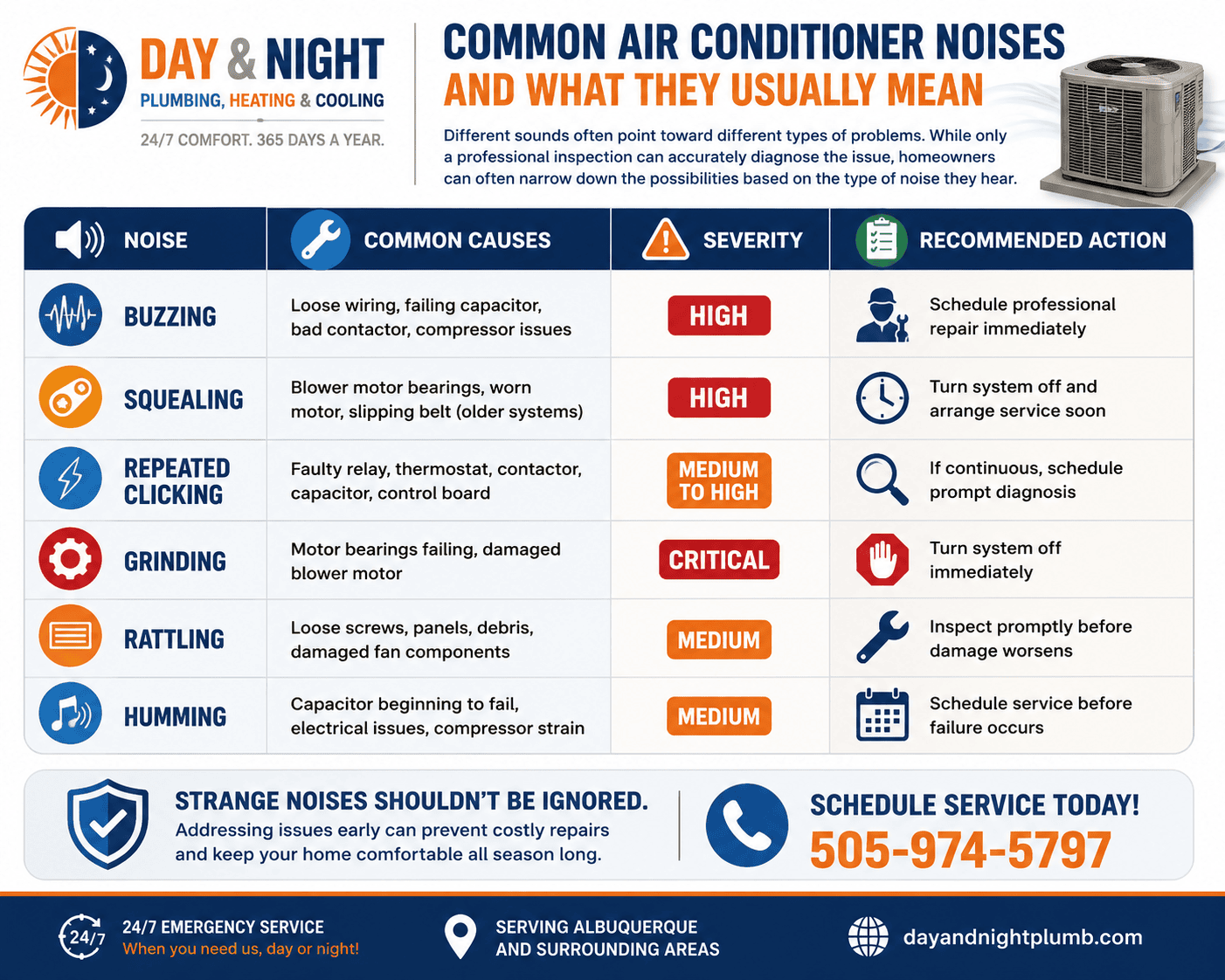
Although this table offers a helpful starting point, similar sounds can have multiple causes. For example, one buzzing sound may originate from a loose electrical connection, while another may come from a compressor that’s beginning to fail. Professional testing helps identify the exact source before unnecessary parts are replaced.
Understanding Buzzing Noises from Your Air Conditioner
Buzzing is one of the most frequently reported air conditioning noises because it can originate from several different components within both the indoor and outdoor portions of the system.
Many homeowners first notice the sound when the outdoor condenser starts during the evening, when the neighborhood becomes quieter. Others hear a constant electrical buzzing that continues even after the cooling cycle should have started.
In either situation, buzzing should never be dismissed as “normal.”
A Buzzing Sound Often Points to an Electrical Problem
Most buzzing noises involve electrical components that either control or power your air conditioning system. These parts experience significant stress during Albuquerque’s long cooling season as temperatures remain high for weeks at a time.
Some of the most common electrical causes include:
- A failing capacitor that can no longer provide enough power to start the compressor or fan motor.
- A worn contactor with pitted electrical contacts that vibrate or chatter during operation.
- Loose electrical wiring creating vibration or electrical arcing.
- A compressor struggling to start because of excessive electrical resistance.
- Electrical connections that have loosened over years of vibration.
If you hear buzzing accompanied by your outdoor unit failing to start, your air conditioner repeatedly attempting to turn on, or warm air coming from the vents, it’s best to shut the system off and schedule a professional inspection. Continuing to operate an air conditioner with an electrical fault can place additional strain on expensive components such as the compressor, potentially turning a relatively straightforward repair into a much more costly one.
In the next section, we’ll take a closer look at the specific mechanical and electrical problems that create buzzing noises, explain why squealing sounds often indicate worn moving parts, and discuss why repeated clicking can be an early warning sign that your air conditioner is struggling to start.
What Causes an AC Unit to Make a Loud Buzzing Noise?
While several components can create a buzzing sound, the most common causes involve the electrical system or the compressor. Unlike a brief hum when the system starts, a loud or continuous buzzing is a warning that something isn’t operating as it should.
Failing Capacitor
Your air conditioner relies on one or more capacitors to provide the surge of electricity needed to start the compressor and fan motors. Over time, capacitors wear out from repeated heating and cooling cycles.
When a capacitor begins to fail, you may notice:
- A buzzing outdoor unit
- The fan struggling to start
- The compressor attempting to turn on but failing
- Warm air coming from your vents
- The system shuts off shortly after starting
Capacitors are among the more common AC repairs, but they should always be replaced by a qualified HVAC technician because they store a potentially dangerous electrical charge even after the power has been disconnected.
Worn or Failing Contactor
The contactor acts like a heavy-duty electrical switch that tells your air conditioner when to start cooling. Every time your thermostat calls for cooling, the contactor closes and supplies power to the compressor and condenser fan.
After thousands of cycles, the contacts can become worn, pitted, or carbonized.
Symptoms often include:
- Loud buzzing
- Chattering sounds
- Intermittent cooling
- The outdoor unit refuses to start
- Frequent system cycling
Ignoring a failing contactor can eventually prevent your air conditioner from starting altogether.
Loose Electrical Connections
Air conditioning systems vibrate every time they operate. After years of use, electrical terminals can loosen slightly, creating vibration, resistance, and even electrical arcing.
Loose wiring may produce:
- Buzzing
- Humming
- Burning odors
- Intermittent operation
- Circuit breaker trips
Because damaged wiring presents both equipment and safety risks, this is not a repair homeowners should attempt themselves.
Compressor Problems
The compressor is often described as the heart of an air conditioning system. If it begins to fail internally, you may hear a loud buzzing or humming as it struggles to start.
Warning signs include:
- Buzzing without cooling
- Outdoor fan running while no cold air is produced
- Frequent breaker trips
- Reduced cooling performance
- Higher utility bills
Since compressor replacement is one of the more significant HVAC repairs, identifying the problem early may help prevent additional damage to other components.
What Causes an AC Unit to Make a Loud Squealing Noise?
A squealing air conditioner often indicates excessive friction between moving components. Unlike buzzing, which usually points toward electrical issues, squealing typically means a motor or rotating part needs attention.
The good news is that many squealing problems can be corrected before they lead to complete motor failure if they’re diagnosed promptly.
Worn Blower Motor Bearings
One of the most common causes of squealing is worn bearings inside the indoor blower motor.
These bearings support the motor shaft while it spins thousands of times per minute. As they wear, lubrication diminishes and friction increases.
Homeowners may notice:
- High-pitched squealing
- Noise becoming louder over time
- Reduced airflow
- Vibrations from the indoor air handler
- Difficulty maintaining comfortable temperatures
If ignored, worn bearings can eventually seize, causing the blower motor to fail completely.
Aging Fan Motor
Both the indoor blower motor and outdoor condenser fan motor contain moving parts that naturally wear over years of operation.
An aging motor may produce:
- Continuous squealing
- Chirping
- Metal rubbing sounds
- Intermittent operation
- Increased electrical consumption
Replacing a worn motor before total failure often helps avoid additional damage to surrounding components.
Belt Problems on Older Systems
Although most modern residential air conditioners use direct-drive motors, some older HVAC systems still rely on belts.
A loose, cracked, or worn belt can create:
- Sharp squealing
- Slipping noises during startup
- Reduced blower speed
- Poor airflow
If your home has an older HVAC system, belt inspection should be part of routine maintenance.
Why You Shouldn’t Ignore Squealing
Many homeowners continue running their air conditioner despite squealing because the system is still producing cool air.
Unfortunately, friction only gets worse over time.
Continuing to operate a system with failing bearings or motors can eventually result in:
- Complete blower failure
- Overheated motors
- Damaged fan assemblies
- Higher repair costs
- Loss of cooling during the hottest days of summer
Turning the system off and scheduling Air Conditioning Repair at the first sign of persistent squealing is often the least expensive solution.
What Causes an AC Unit to Make Repeated Clicking Noises?
Most air conditioners make a single click when starting and another when shutting down. That’s completely normal.
What isn’t normal is repeated clicking, rapid clicking, or clicking that continues without the system ever starting.
These symptoms usually indicate that your air conditioner is attempting—and failing—to begin a cooling cycle.
Thermostat Problems
Sometimes the thermostat sends repeated start signals because it cannot properly communicate with the HVAC equipment.
Possible issues include:
- Loose wiring
- Faulty thermostat
- Low thermostat batteries
- Incorrect calibration
- Internal electronic failure
A technician can determine whether the thermostat itself is at fault or whether another component is preventing startup.
Failing Relay or Control Board
Modern air conditioners use electronic control boards and relays to coordinate system operation.
As these components age, they may repeatedly attempt to energize the system, creating rapid clicking sounds.
Other symptoms include:
- Random shutdowns
- Short cycling
- Delayed startup
- Intermittent cooling
Electronic diagnostics are usually needed to pinpoint the exact cause.
Weak Capacitor Preventing Startup
A failing capacitor may also create repeated clicking.
Here’s what happens:
- The thermostat calls for cooling.
- The contactor clicks.
- The compressor attempts to start.
- The capacitor cannot provide enough power.
- The compressor shuts back down.
- The thermostat immediately tries again.
This repeated sequence creates the clicking homeowners often hear from the outdoor condenser.
Continuous Clicking Should Never Be Ignored
Repeated clicking places tremendous stress on electrical components because the system continually attempts to start.
Left unresolved, this can shorten the life of:
- Compressors
- Capacitors
- Contactors
- Fan motors
- Circuit breakers
Prompt diagnosis often prevents a relatively inexpensive repair from becoming a much larger one.
Why Albuquerque’s Climate Makes AC Problems More Common
Air conditioning systems in Albuquerque operate under demanding conditions. The region’s high-desert climate combines intense summer heat, low humidity, dust, and extended cooling seasons that place additional strain on HVAC equipment. These local conditions are specifically identified as important considerations when maintaining cooling systems in Central New Mexico.
Several factors contribute to unusual AC noises in Albuquerque:
- Long periods of daily operation during summer heat
- Dust accumulation on motors, coils, and electrical components
- Temperature swings between hot days and cooler nights
- Increased wear from frequent system cycling
- Aging equipment working harder to maintain indoor comfort
Routine Air Conditioning Maintenance is especially valuable in Albuquerque because technicians can identify loose electrical connections, worn bearings, weak capacitors, and other developing issues before they become emergency repairs during the hottest part of the year.
If you live in Albuquerque, Rio Rancho, Corrales, Bernalillo, Los Ranchos de Albuquerque, or elsewhere in Central New Mexico, scheduling seasonal inspections can significantly reduce the likelihood of hearing those alarming buzzing, squealing, or clicking noises in the middle of summer.
Frequently Asked Questions
Why is my AC making a loud buzzing noise?
A loud buzzing noise often indicates an electrical problem such as a failing capacitor, worn contactor, loose wiring, or a compressor that’s struggling to start. While the exact cause requires professional testing, buzzing should never be ignored because electrical issues can worsen quickly and may damage expensive components if the system continues running.
What causes an AC to squeal?
Squealing usually comes from moving parts experiencing excessive friction. Common causes include worn blower motor bearings, an aging fan motor, or—on some older HVAC systems—a slipping drive belt. Because these components continue to deteriorate while operating, it’s best to shut the system off and schedule professional service before additional damage occurs.
Why does my AC keep clicking but won’t start?
A single click when your air conditioner starts or stops is normal. However, repeated clicking often means the system is attempting to start but cannot complete the cooling cycle. This may be caused by a weak capacitor, faulty contactor, thermostat problem, relay failure, or a malfunctioning control board. A qualified HVAC technician can identify which component is preventing the system from starting correctly.
Is it safe to run an air conditioner that’s making strange noises?
It depends on the type of noise. Grinding, loud buzzing, metal scraping, or burning smells usually require shutting the system off immediately to prevent additional damage or potential electrical hazards. Minor rattling or an occasional click may not require an emergency shutdown, but the system should still be inspected promptly before the problem becomes more serious.
Can a buzzing AC become a fire hazard?
Although it’s uncommon, electrical failures involving loose wiring, failing contactors, damaged insulation, or overheating components can create safety concerns. If buzzing is accompanied by burning odors, smoke, sparks, or repeatedly tripped circuit breakers, turn the system off immediately and contact a qualified HVAC professional for emergency service.
What does a bad blower motor sound like?
A failing blower motor may produce squealing, chirping, grinding, humming, or rattling noises depending on which internal components are wearing out. You may also notice reduced airflow, uneven cooling, or higher utility bills as the motor becomes less efficient.
Can a bad capacitor make buzzing sounds?
Yes. A weak or failed capacitor is one of the most common causes of buzzing. When a capacitor can no longer provide enough electrical energy to start the compressor or fan motor, the outdoor unit may buzz without fully starting, or it may repeatedly attempt to turn on before shutting back off.
Why does my outdoor condenser keep buzzing?
Continuous buzzing from the outdoor condenser may indicate problems with the compressor, contactor, capacitor, electrical wiring, or condenser fan motor. Because these components operate using high voltage, they should be inspected by a trained HVAC technician rather than repaired by homeowners.
Should I turn my AC off if it starts squealing?
Yes. Persistent squealing usually indicates excessive friction from worn bearings or another mechanical issue. Continuing to run the system may cause complete motor failure and significantly increase repair costs. Turning the system off and arranging professional service is the safest option.
When should I call an HVAC technician?
You should schedule professional service whenever unusual AC noises persist, become louder, occur repeatedly, or are accompanied by reduced cooling performance, burning smells, water leaks, frozen coils, short cycling, or rising energy bills. Early diagnosis often prevents a relatively minor repair from becoming a major system failure.
Conclusion
Your air conditioner is designed to operate quietly, so unusual noises are almost always your system’s way of telling you that something needs attention. Whether you hear buzzing, squealing, clicking, grinding, humming, or rattling, each sound provides valuable clues about the condition of your HVAC system.
Many problems begin as relatively small issues—a weakening capacitor, worn motor bearing, loose electrical connection, or failing contactor—but they rarely improve on their own. Instead, these components typically continue to wear until they eventually cause a complete system shutdown, often during Albuquerque’s hottest summer days when your air conditioner is working its hardest.
The good news is that many expensive repairs can be avoided through prompt diagnosis and routine maintenance. Having an experienced HVAC technician inspect unusual sounds early often prevents unnecessary damage to compressors, motors, electrical components, and other critical parts, helping extend the life of your cooling system while keeping your home comfortable and energy efficient.
If your air conditioner has started making noises that concern you, don’t wait for the problem to become worse. Professional diagnosis today can save you from a much larger repair tomorrow.
Contact Day & Night Plumbing, Heating & Cooling for Expert AC Repair
If your air conditioner is making buzzing, squealing, clicking, grinding, humming, or any other unusual noise, don’t ignore the warning signs. The experienced technicians at Day & Night Plumbing, Heating & Cooling have the knowledge, diagnostic equipment, and hands-on expertise to quickly identify the source of the problem and recommend the most effective long-term solution.
Serving homeowners and businesses throughout Albuquerque, Rio Rancho, Corrales, Bernalillo, Los Lunas, Placitas, Edgewood, Tijeras, Bosque Farms, and surrounding Central New Mexico communities, our team provides dependable 24/7 emergency HVAC service, comprehensive air conditioning repairs, seasonal maintenance, and complete system replacements when necessary. Our commitment to thorough diagnostics, honest recommendations, and dependable workmanship reflects the company’s mission and customer-first approach.
Don’t let a small AC problem become an expensive breakdown.
Contact Day & Night Plumbing, Heating & Cooling today to schedule professional air conditioning diagnostics and restore your home’s comfort with confidence.