
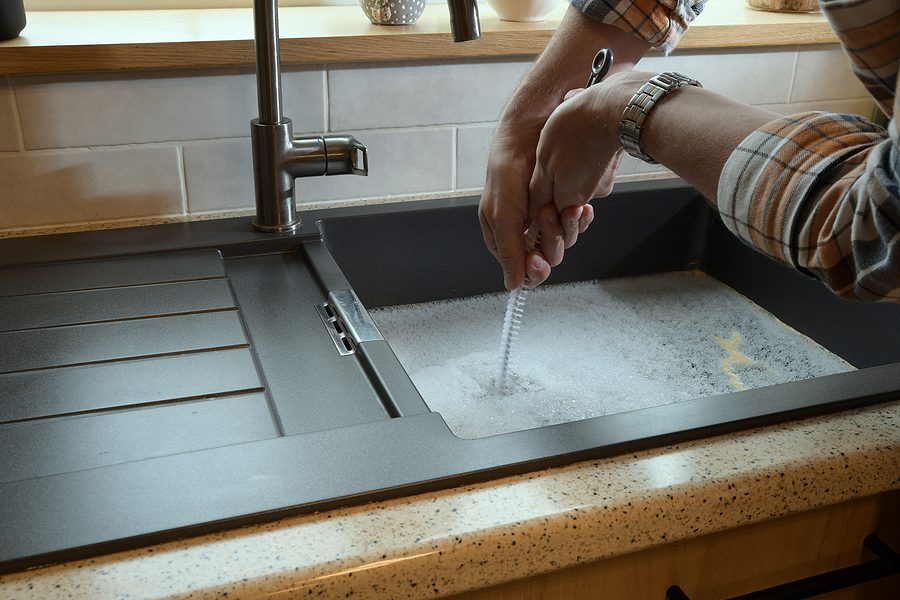
 No one likes their plumbing pipes clogged whether they carry water or waste. When potable water experiences a complete or partial blockage, the water will take the path of least resistance and react, through backup and flooding, or a slow drain and have a low pressure.
Some are minor headaches and hassles and others result in major damage and costs. There are those who want to know how to avoid such situations altogether or there are others who are looking for help with some sort of issue.
Understanding more about what causes clogged drains is the best insurance policy when it comes to accidents and is always an excellent preventative measure to protect against destructive blockage. You can then avoid and detect problems based on what you know.
The process seems like it should be straightforward enough – locate the drain clog and extract it – but fixing clogged pipes can be complicated and labor intensive.
It depends on where the clog is located, what it is made up of, and what must be done to access it and remove it.
Common Causes
The sewer and water drainage systems of a house are a little like a tree and its branches. They have a main line, usually larger in diameter, and sub lines, which typically are of a little smaller size. Though perhaps “most” clogs originate from the toilet “most” can also begin to develop a clog from any place within the system.
The location where a blockage builds and ultimately gets stuck is variable, but analysis will help to rule in or out potential sites. You will have visibility into what is going on and where specifically the problem is impacting things.
A blockage in the water or sewer main usually means a blockage that impacts the entire unit or building. Slightly more worrisome, if something is stuck in one of the sublines, whatever is taking place is most likely confined to a single area or section of the building.
Tree roots
Entire trees roots are notorious for causing majority of blockages and clogs in water and sewer mains. Though older homes tend to be more susceptible to tree roots entering their pipes, these roots can infiltrate systems of any age.
According to some, a gurgling noise is the first indication of tree roots entering the sewer or water line.
Tree roots as living entities are in search of moisture and therefore more or less naturally tend to follow the water found in wastes and sanitarysewer pipes, particularly if there are any cracks or leaks in the pipe.
Those in wooded areas or near clusters of trees should watch for tree root infiltration. Many individuals opt to have the video inspection done every few years as the cost of the service is significantly less than dealing with a problem that is overlooked.
“Flushable” wipes
The flushable wipes are a negative element of the system. Municipalities and other agencies that handle and treat sewage have started warning against use of the so-called flushable wipes.
These wet bathroom wipes, which have become trending use items in recent years, have similarly prompted lawsuits based on allegations that the wipes dissolve when flushed. Supposedly they don’t disintegrate when flushed, and are only labeled “flushable” because they make their way through the pipe.
The issue of wipes and their effects on public infrastructure has ballooned from small municipalities to the Federal Trade Commission, with reports that millions of dollars are involved and public awareness efforts are underway in several states and cities. Some water treatment companies have addressed the issue by purchasing costly industrial shredders to process the wipes.
The reality is that thick toilet paper, paper towels, facial tissues, light cardboard and other paper products are not designed to be flushed down the toilet. Home and commercial plumbing systems are designed to accept and process water, human waste, and toilet paper that is biodegradable. That’s it.
Feminine hygiene
Both feminine hygiene products and baby diapers are dangerous to plumbing pipes in that, because they are non-biodegradable, they contain cotton and other fibers that have an enormous ability to clog and snag on other clogging agents.
Both are non-biodegradable and threaten public and private systems.
The sewage treatment process includes microorganisms that digest human waste, but those microorganisms don’t decompose anything else — even if pad wrappers and tampon applicators are labeled “flushable.”
Fat, oil, and grease
Plumbing and all of its accessories are not friends with fat, oil, or grease. A second movement, which is being more publicized, is consumer education on preventing oily materials from going down the drain where they can accumulate and cause problems. While employees of a business require specific education of what belongs or not in the drain and in the public system, people in other private spaces could also require this education.
Most of us like to believe we wouldn’t pour a pan of bacon grease down the drain or garbage disposal, but we may not consider some of the other items that contain fat, oil, or grease. Some examples would be trimmings of a steak or other meat, butter, vegetable oil, chocolate, cream, etc.
And while it may seem obvious that water just washes anything along, fats are inherently sticky, binding materials that are prone to causing buildups and eventually clogs. Fat, oil, or grease belong in the trash can. Instead, bacon grease and other fats and oils can simply cool and solidify or congeal for easy cleanup. A more favored method is to pour the oil or grease into a container that can be thrown away and dispose of it in the garbage.
Hair
Excessive accumulation of hair can lead to slow flow or complete blockage. It’s not our fault that hair naturally falls from our heads, but we can try to mitigate it by investing in small screens to protect the drain and by employing good practices, like sweeping hair out of sinks and cleaning hair brushes over the trash can.
If you notice hair collection around the drain, or perhaps it is dangling from the drain, regularly work to remove the hair with needle-nose pliers or slowly and gently working long tweezers into the drain and pull the hair out rather than allowing it to sit or wash down the drain. There are also a variety of drain screens that prevent hair from entering the drain and help removal.
Pipe scale
Pipe scale is a natural product that interacts with your pipes, it can actually, build up to where you have a clog or blockage from the mineral deposits the water leaves behind. Deposits are usually due to the presence of dissolved calcium and magnesium, sometimes also other metallic elements, which precipitate as the water flows.
These particles respond to both temperature and constant wet-dry conditions. A clump of scale forms in one location, which draws more scale to it, until it reaches a size that is obstructive. Mineral scale can accumulate in pipes, but also in other appliances that use water, such as clothes and dish washers.
Food
Food scraps and pieces should be disposed of in the trash, not in sink, tub or laundry drains. And especially not down the toilet. None of these drains can stand much of it, because that isn’t what they were meant to convey. Edibles are sticky, stringy, sharp, or hard, all of which are bad in a water pipe.
Though we will cover garbage disposals in more detail later, certain foods should never be put down the most powerful garbage disposal systems. The secret of the disposals is that they chop the material into small enough bits that they will pass through the drain pipe without clogging. But much of the food we eat is not amenable to shredding.
Disintegration
The pipes can disintegrate, and this is more likely to be the case in older homes, or homes with concrete, clay, or terra cotta pipes that are aging. Joints can separate and drop and soil can wash away, resulting in sagging of the pipe.
In locations that experience hard freezing in winter, there is the potential for pipes to shift with constant pressure and heaving of the freeze-thaw cycle. Even with today’s pipes, constructed from super-hardened plastic, damage is possible just from natural soil shifting and seasonal changes.
Nature
Nature can also find its way into sewer or water lines, particularly where the pipes have separated. It can be hard to find blockages underground caused by leaves, sticks, dirt, rocks, or even rodents. Because leaves are ubiquitous and very effective clogging material, it’s a good habit to remove them from the yard and definitely not wash them down the storm sewer drain.
We’ve all seen a small weed sprout in the tiniest crack, and any small breach in the plumbing pipes becomes a means for roots, plants and dirt to infiltrate, grow, and cause clogging.
Objects
Bar soap is another item that can break into pieces and get stuck in the drain, not to mention things that shouldn’t be down there, like jewelry, kids’ toys, condoms, dental floss, and food. Again, only water, human waste and biodegradable toilet paper should go down the system.
The significance of this idea is evidenced by piles of articles and entire programs on “How to Train” small, learning children and numerous, funny bathroom signs that request adults to only deposit the basics.
Cat litter
Cat litter should not be flushed down the toilet or any drain, and dog poop should be thrown away in a bag, not down the toilet.
All kitty litter is a clay product which can literally set up like concrete when wet and dry. The pieces of litter are sharp and easily catch on other objects, increasing the possibility of a clog.