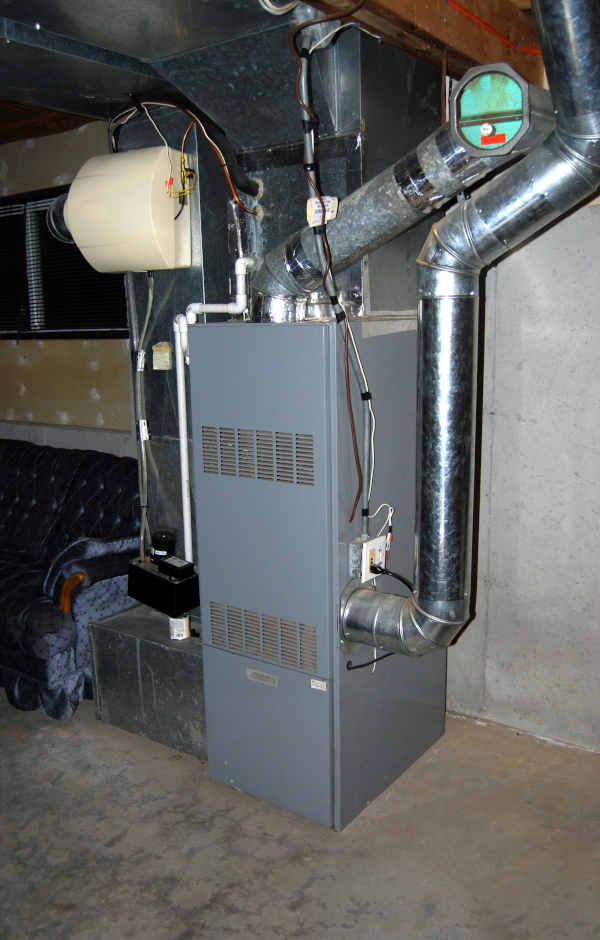
An old, inefficient, banging furnace is a good signal to get a new furnace, right? Not necessarily. Should you repair or replace your furnace?
If you own your home long enough you’ll likely have to replace your HVAC system to maintain comfort. The good news is that furnaces have a lifespan of anywhere from 15 to 30 years with proper care and you can make some repairs along the way to help keep your system for as long as possible.
Determining when it’s time for a completely new furnace versus when to repair can be tricky. Fortunately, several factors can inform the choice.
What’s the Problem with Your Furnace?
The price of installing a new furnace is not cheap, that much is certain. Overall, you can expect to pay around $5,500, the average price of a new furnace.
This is why it’s important to take a moment to assess whether you should repair or replace your furnace even when yours is down in the chill of the winter.
The most frequent furnace repairs that might necessitate a replacement/furnace issues are:
- Blown motor
- Broken thermostat
- Uneven heating or cooling
- Clogged or dirty filters
- Cracked heat exchanger
- Over-cycling
- Switch malfunctions
Some of these may be minor repairs or quick maintenance, but other cases may call for total furnace replacement, particularly if it is one of a number of furnace problems.
It’s good to know when to seek HVAC service and who to contact when you do so even if it means throwing on another sweatshirt for a few hours while you wait for help when your furnace fails. In some cases furnace replacement should happen immediately and can be deemed as an emergency action.
Reasons to Replace Your Furnace
Here are six scenarios in which you should likely plan on a full furnace replacement.
Your Furnace Is Emitting Carbon Monoxide
The moment you suspect your furnace is leaking carbon monoxide, or worse your CO detector has been activated and you don’t know the cause, exit the house immediately. After you are out, call the fire department and wait for their instructions. Wait until then to begin researching local HVAC professionals that can install a new furnace.
Carbon monoxide (CO) is a colorless, odorless, and poisonous gas that can cause illness and death. The only way to definitively verify furnace CO production is with a CO detector, but some other indications of a problem includes yellow flames in your furnace. If your burner is producing CO then it needs to be replaced to keep you and your family safe.
Repairing it when it is needed will ensure that your HVAC system continues to run properly and efficiently. Of course, even immaculate service can’t prevent your furnace from aging indefinitely.
Your Furnace Is Old
Furnaces also have a life expectancy, and for the purposes of determining whether or not you’ll replace or repair, consider 15 years a good cut-off. If your furnace is older than that, then you should replace your unit rather than put hundreds or thousands of more dollars into repairs.
If it is functioning just fine but it is 15 years old, either replace when it goes down or you can repair it alternatively to be pro-active and not wait until you are left with no heat thus putting yourself in an emergency situation.
Your Furnace Makes Loud Noises
Popping, banging, screeching, rattling and squealing sounds are more than just annoying; they can signify an overheating unit that causes metal to expand or grind up against objects within the unit.
But, if your unit is relatively young (under ten years old) and you hear those noises, dirt could be the problem. This issue can be remedied by having your local furnace repair man clean the system and replace filters. If it’s older than that, it may be time to replace it.
Pro Tip
Never dismiss weird smells, odd banging sounds, or any form of mishap with how well your heating system is working. Such things may be symptomatic of dire issues. If you do, then shut down your system and contact a technician immediately.
Repair Costs Are 30% or More of Replacement Costs
At some point, you might have to “cut your losses and just replace”. Some repairs are just not worth spending money on (particularly if you’re in the 10 to 15 year range, unless of course purchasing a new furnace is not within your budget at this time).
For instance, the expense of replacing a blown furnace motor could cost as much as $900. Generally speaking, if device repairs costs about 30%, or approximately $1,500 to $2,000, of the value of your device then you should consider whether you should repair or replace your device. Request a quote from local vendors to find something that fits your budget.
Your Furnace Isn’t Warming Your Home Evenly
Uneven heating is one annoying byproduct of a furnace that isn’t working well. There may be a sauna in one room and a freezer in another.
If this is a recurring issue you might need to consider replacing the unit. But if this is the only problem with your device, make sure to read the reasons why you should fix your furnace below.
Uneven heating can, at times, be related to other, less expensive to fix, parts of your HVAC system. But, if the culprit was merely a closed damper, you could save thousands by not replacing your furnace.
Your Energy Bills Are Through the Roof
If your furnace is older or less efficient than newer models, your heating or cooling bill might be creeping up tens or even hundreds of dollars each month. This can be a worthy expense for a season or two if your device is rather new.
But if that sudden increase is of the order of few hundred or even thousand dollars per year, then you have a sufficient incentive to at least consider replacing it. At the very least, Day & Night Plumbing can come out and give you a professional opinion about whether you should repair or replace your furnace.