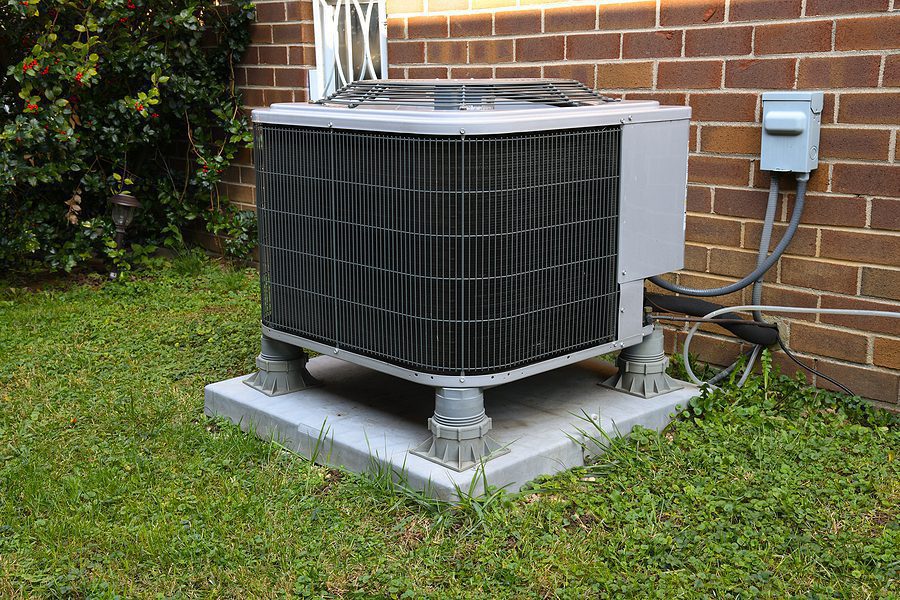
 It is the middle of a hot summer night, your home is finally quiet, and then it starts: a loud, rhythmic sound coming from your cooling system that wasn’t there last week.
Strange air conditioner sounds keep homeowners awake for two reasons—the noise itself, and the looming fear of an expensive replacement bill. When your system starts speaking to you, it is vital to listen. Unusual sounds are the early warning system of an HVAC unit under severe mechanical stress, especially during peak summer heat waves that often occur across Albuquerque, and the Greater Albuquerque metro-area. The noises could be the immediate need of AC repair.
Depending on whether your system is buzzing, squealing, or clicking, you can narrow down exactly what is happening under the hood before you call in reinforcements.
Detailed Breakdown of AC Noises
According to leading HVAC manufacturers and engineering data, different sounds point to very specific component failures. Pinpointing the exact texture of the noise helps diagnose the severity of the issue.
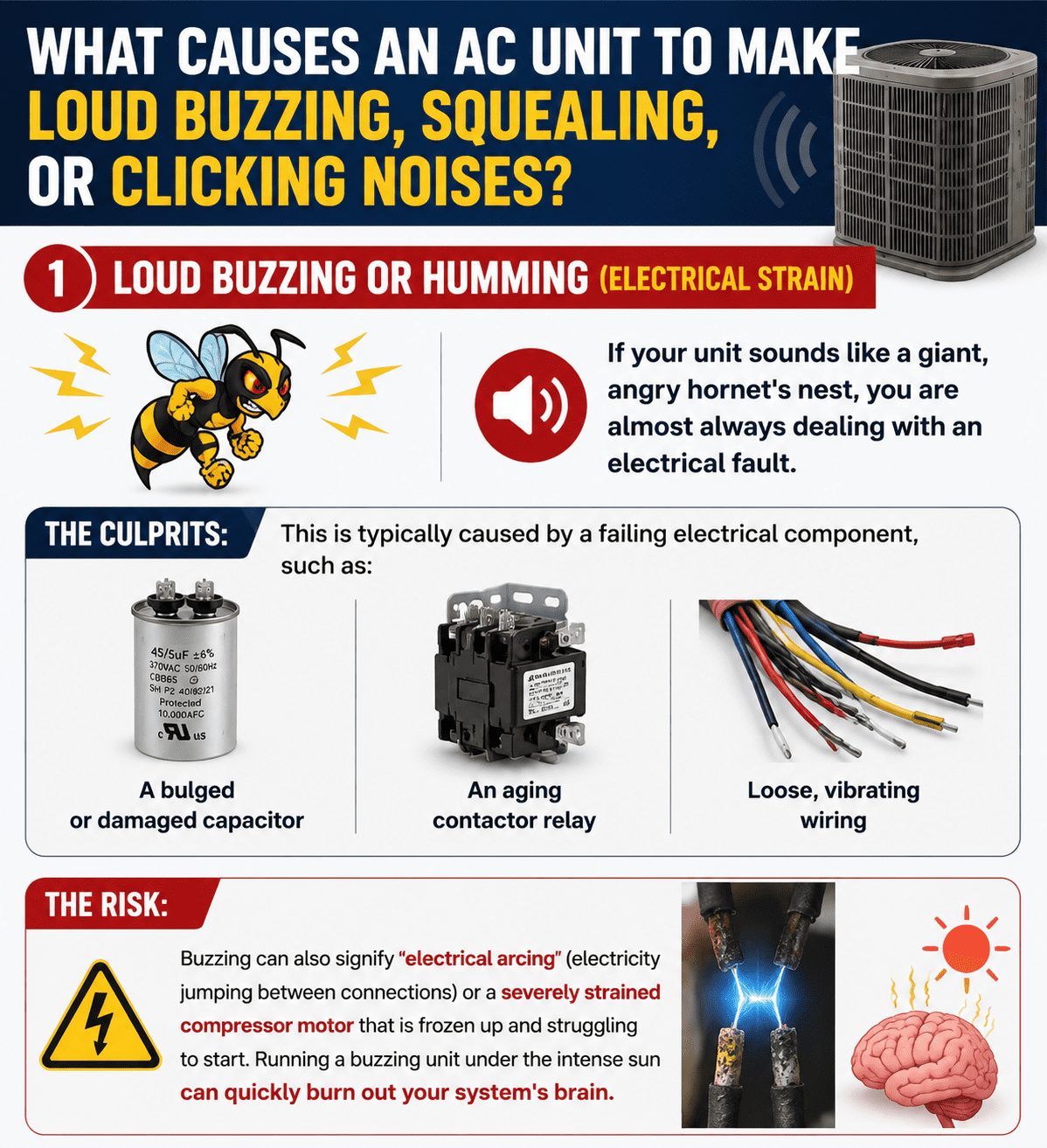
1. Loud Buzzing or Humming (Electrical Strain)
If your unit sounds like a giant, angry hornet’s nest, you are almost always dealing with an electrical fault.
- The Culprits: This is typically caused by a failing electrical component, such as a bulged or damaged capacitor, an aging contactor relay, or loose, vibrating wiring.
- The Risk: Buzzing can also signify “electrical arcing” (electricity jumping between connections) or a severely strained compressor motor that is frozen up and struggling to start. Running a buzzing unit under the intense sun can quickly burn out your system’s brain.
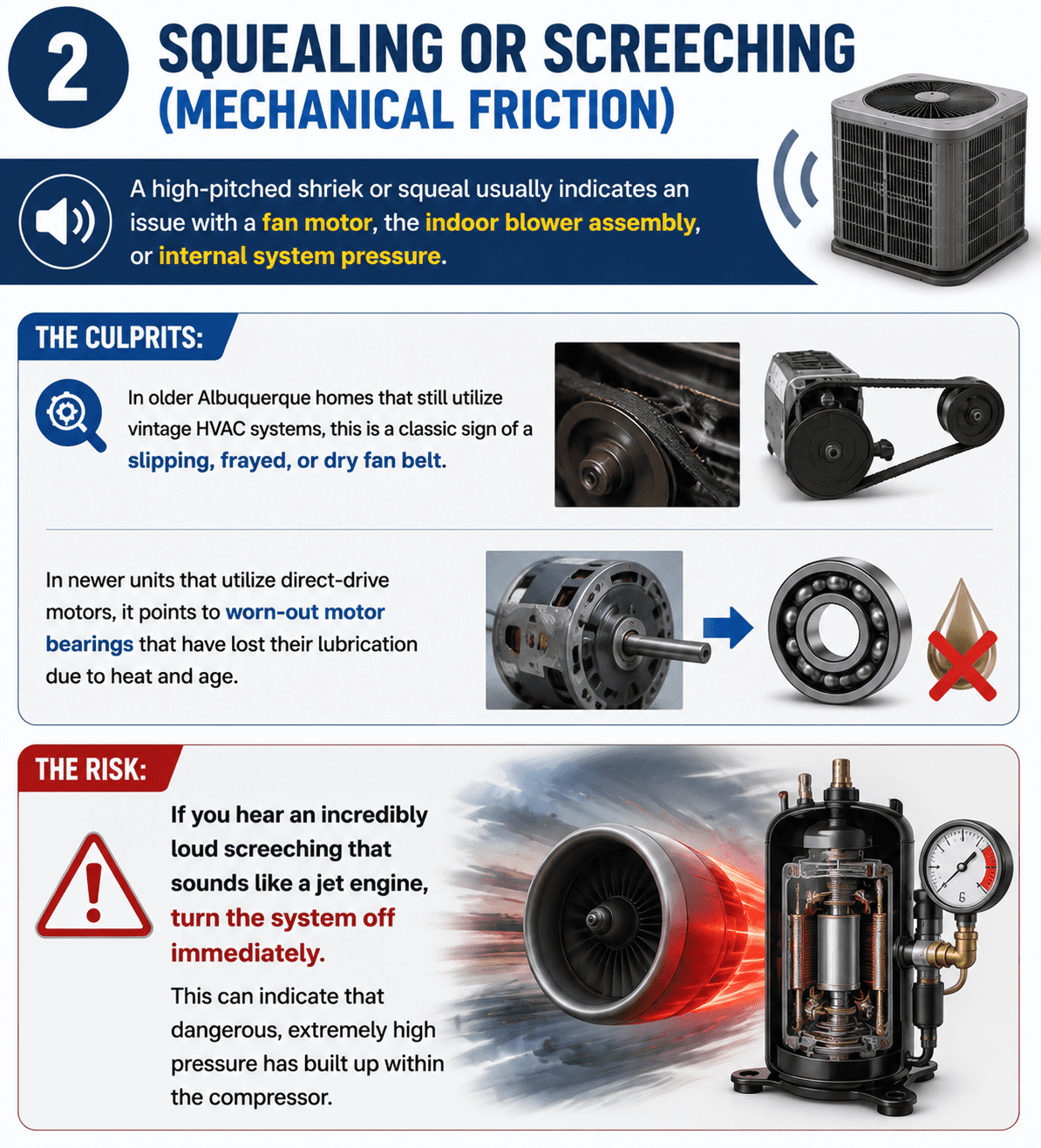
2. Squealing or Screeching (Mechanical Friction)
A high-pitched shriek or squeal usually indicates an issue with a fan motor, the indoor blower assembly, or internal system pressure.
- The Culprits: In older Albuquerque homes that still utilize vintage HVAC systems, this is a classic sign of a slipping, frayed, or dry fan belt. In newer units that utilize direct-drive motors, it points to worn-out motor bearings that have lost their lubrication due to heat and age.
- The Risk: If you hear an incredibly loud screeching that sounds like a jet engine, turn the system off immediately. This can indicate that dangerous, extremely high pressure has built up within the compressor.
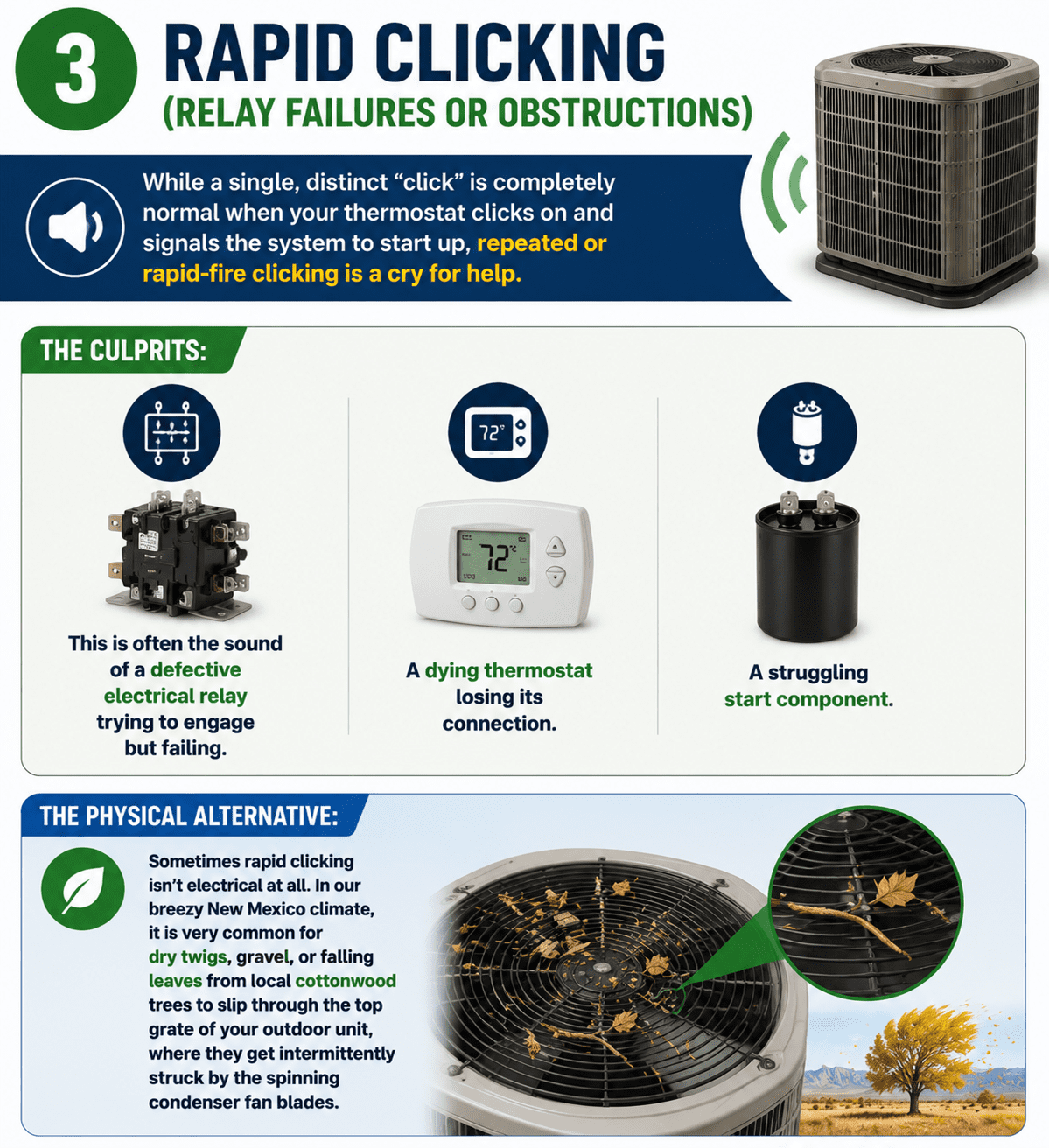
3. Rapid Clicking (Relay Failures or Obstructions)
While a single, distinct “click” is completely normal when your thermostat clicks on and signals the system to start up, repeated or rapid-fire clicking is a cry for help.
- The Culprits: This is often the sound of a defective electrical relay trying to engage but failing, a dying thermostat losing its connection, or a struggling start component.
- The Physical Alternative: Sometimes rapid clicking isn’t electrical at all. In our breezy New Mexico climate, it is very common for dry twigs, gravel, or falling leaves from local cottonwood trees to slip through the top grate of your outdoor unit, where they get intermittently struck by the spinning condenser fan blades.
What To Do Next: A Manufacturer Guide
If you want to cross-reference the specific sounds your unit is making based on the brand installed at your property, leading manufacturers provide operational safety guides:
- Goodman Systems: Review system health and operational safety parameters using the Goodman Sound of Air Conditioners guide.
- Hitachi Systems: Access direct diagnostic troubleshooting via Hitachi Air Conditioning AC Noises documentation.
- General Strain: Learn how different sound frequencies relate to system strain and component wear on the Amarillo Air Conditioning diagnostic blog.
Critical Safety Step: If your system is making any of these sounds consistently, shut off the power to the unit immediately via your outdoor electrical breaker or your indoor thermostat. Forcing a noisy system to keep running in the high-desert heat can turn a cheap electrical fix into a permanent, catastrophic compressor failure.
Frequently Asked Questions About AC Noises
Is it safe to run my AC if it is making a loud squealing noise?
No, it is not safe to run your system because a loud squealing noise indicates that a mechanical component has lost lubrication or a belt is about to snap. Allowing the system to run with failing bearings can cause the blower fan or condenser motor to seize entirely, which can overheat the motor and potentially cause a small electrical fire.
Why does my AC click repeatedly but the outdoor unit won’t start up?
Repeated clicking without the outdoor unit turning on usually means the electrical control board or thermostat is successfully sending a signal, but a starter component—like the capacitor or contactor relay—is broken. Because the start component cannot deliver the necessary electrical surge to jumpstart the motor, the system loops through a continuous, failing click-start cycle.
Fast, Professional AC Repair in Albuquerque
When your air conditioner starts making bizarre noises, you need a local team that understands the specific challenges of keeping HVAC systems running smoothly in our high-desert climate.
If you live in the Albuquerque metro area, Day & Night Plumbing, Heating & Cooling is ready to silence the noise and restore your peace of mind. As a trusted, locally owned and operated indoor comfort team with over 25 years of experience serving New Mexico homeowners, they specialize in fast, accurate AC noise diagnosis and precision repair.
Whether your unit needs a simple capacitor replacement, a new blower motor, or a thorough clearing of seasonal debris from inside the condenser casing, their team of licensed HVAC professionals will diagnose the issue honestly and accurately.
Tired of listening to a noisy AC? Protect your compressor from permanent damage. Contact the team at Day & Night Plumbing, Heating & Cooling today at 505-974-5797 to schedule a professional inspection.