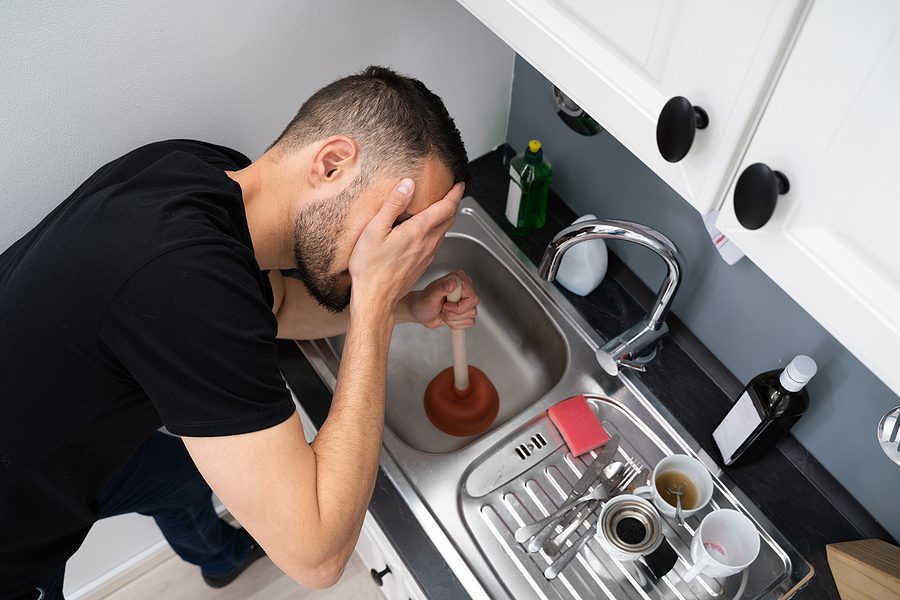
 Most homes encounter a drain clog at least a time or two.
Nobody likes a clogged sink, and in fact it’s one of the most annoying plumbing issues because in some cases can mean it is impossible to use a room in your house – a clogged kitchen sink, for example, means you can’t do any food prep in there!
Doesn’t matter if it is a clogged kitchen sink drain, a clogged shower drain or a clogged toilet, drains can bring your life to a screeching halt and always seem to happen at the worst possible moment!
But, it is a problem that is unavoidable and should be dealt with to help the home run smoothly.
In this guide, you will be equipped to deal with drain clogs directly. We will discuss how this common household issue arises, how to recognize it and how you can say so long to a slow drain and live the smoothly flowing lifestyle.
No more clogged drains, it’s time to take back control.
Identifying The Problem – Signs and Types of Drain Clogs
Locating the source of the issue is the first step to unblocking a drain.
- Is your sink, shower, or tub draining slowly?
- Is your toilet gurgling when it flushes or refills?
- Is there backup of water or waste in your basement?
- Is there an odor coming from your sink, tub, toilet, or basement drain that smells like something died?
These are indications of a clog. It’s not going to just resolve itself; it’s not something that you want to allow drop to the end of your “to do” list.
Waiting to deal with the problem can result in property damage and costly repairs like repair of water damage, while taking care of it immediately can save you time and money as well as stress.
How to Unclog Drains Naturally (DIY Solution)
Prior to starting any do it yourself household task safety must be considered. Grab safety goggles, gloves, even a mask to keep your eyes, skin, nose, and mouth protected from the mess and smells you will encounter.
The simplest and some of the best DIY home unclogging drains solutions that you can make involve hot/boiling water, baking soda, and vinegar.
How To Unclog A Shower Drain
In the case of bathroom clogs, hair and soap scum may be to blame.
They can be easily clogged and you will be asking yourself how to unclog the shower drain or how to unclog bathtub drain on your own rather than waiting until you need assistance once every three months. This is how to use the three most popular household items to unplug a drain.
- Pour a kettle of boiling hot water down the drain in question.
- Mix 1 cup of water and 1 cup of vinegar.
- Pour one cup of baking soda and the solution you just created down the drain.
- Block the drain and allow to sit for approximately 10 minutes.
- Take more boiling water and dump it on the drain.
The reaction you will get from this baking soda and vinegar-water solution will be one that should take you back to grade school science projects.
Which means it is working: it is unplugging the drain. To explain scientifically, the combination of baking soda, water, and vinegar you concocted in the drainpipe, along with the hot water pressure and the force of gravity, works to dislodge and remove the clog.
Another alternative is to pour straight ½ cup of baking soda, ½ cup of vinegar, and lemon juice and then boiling water. Allow that to sit for a few hours, and see if the clog began to clear and your drain smells better!
Alternatively, ½ cup of each, salt and baking soda, let sit for about 15 minutes, then pour boiling water down to clear.
Disclaimer: Do not pour boiling hot water down PVC drainpipes, it may ruin them. It can also serve as a natural unclog drain process to:
- Clear shower drain
- Clogged sink drain
- Clear tub drain
- Clear a drain blockage
These natural do it yourself solutions should work to clear simple drain problems, but if not, it’s time to contact a plumber, such as the Albuquerque clog repair experts over at Day & Night Plumbing. Perhaps there is a more significant or deeper clog than you can resolve with household tools.
How To Unclog Bathroom Sink Drains
If the clog is accessible, a couple of simple and easy methods for unclogging bathroom sink drains exist.
You’ve probably fixed a backed-up toilet with a plunger sometime in your life, but have you ever attempted to plumb a backed-up sink? Plug the sink’s over flow hole with a rag and plunge the sink as you would a toilet. It will force the clog loose and prevent it from exploding out that overflow hole.
More complicated would be to clean the P-trap under the sinks. The first step is to turn off the water. Grab a bowl and some gloves. Position the P-trap below the sink drain to catch water, clogs, or other debris. Remove it, unplug the clog with your hands or a drain snake as much as you can, and reattach the P-trap.
The same process, adding a wet-dry vacuum set to wet, is also worth a try for unblocking clogs in bathroom sink drains.
Unclog Kitchen Sink Drain
Food and grease or oil are the most common causes of kitchen drains. Because of the fact that these are among the most difficult types of clogs to clear, it’s no surprise that there are solutions tailored just for this type of household clog.
A great hack to remove tough grease clogs or to unclog the kitchen sink drain is to pour some dish soap downtube. Let stand for a few minutes and follow with boiling water. Repeat as necessary but if you still can’t dislodge the clog, then the clog probably isn’t grease at all but something else.
You could also purchase a drain snake and give that a go. Put it in the drain and turn until you hit resistance and push through the clog. Then, turn in the opposite direction to pull the snake back out and remove the clog. Run water to ensure the clog is flushed out.
When to Call a Professional to Unclog a Drain
You’ve completed all the above troubleshooting and do it yourself techniques, yet still have every indication of a clog, etc.
Not every clog can be solved by home remedies, and that is when reinforcements should be called in!
Many times, a stubborn clog, will either not respond to natural unclogging solutions, or can’t be accessed without tools. These professionals will carry out video camera inspections so as to help you determine the site of the clog, and what comes next.
We will offer you options, and allow you to determine the best solution for your home or business.
How to Prevent Clogged Drains
Suppose you just finished some sort of bathtub drain issues or drain unclogging project.
You definitely don’t want to find yourself dealing with the same problem a month or two later. Your drainpipes can be kept in good shape and problems such as clogs avoided, just like any other household system, with regular cleaning.
Some additional benefits include that it removes nasty smells, it helps prolong the life of your drains and therefore plumbing, and it makes for a healthier home and family!
Some simple things you can do that achieve this include:
- Do not pour oil, grease or chemicals down the drain
- Never place coffee grounds, potato peels, eggshells or fibrous veggies in the drain
- Do not flush “flushable wipes”
- Tidying up greasy pans prior to washing them.
- Screened drains to catch hair, soap, and food from going down drains they shouldn’t or collect and cause a backup.
Finally, perhaps the most effective approach to avoid clogs and to improve the health (and smell) of your home would be to regularly practice these home remedies above, such as boiling water, baking soda, vinegar, and lemon juice, once a month as preventative maintenance.
You’ll spend way less time googling “how to unclog a shower drain”, dealing with the aftermath of clogs and preventing messes and property damage and much more time doing what you love.